

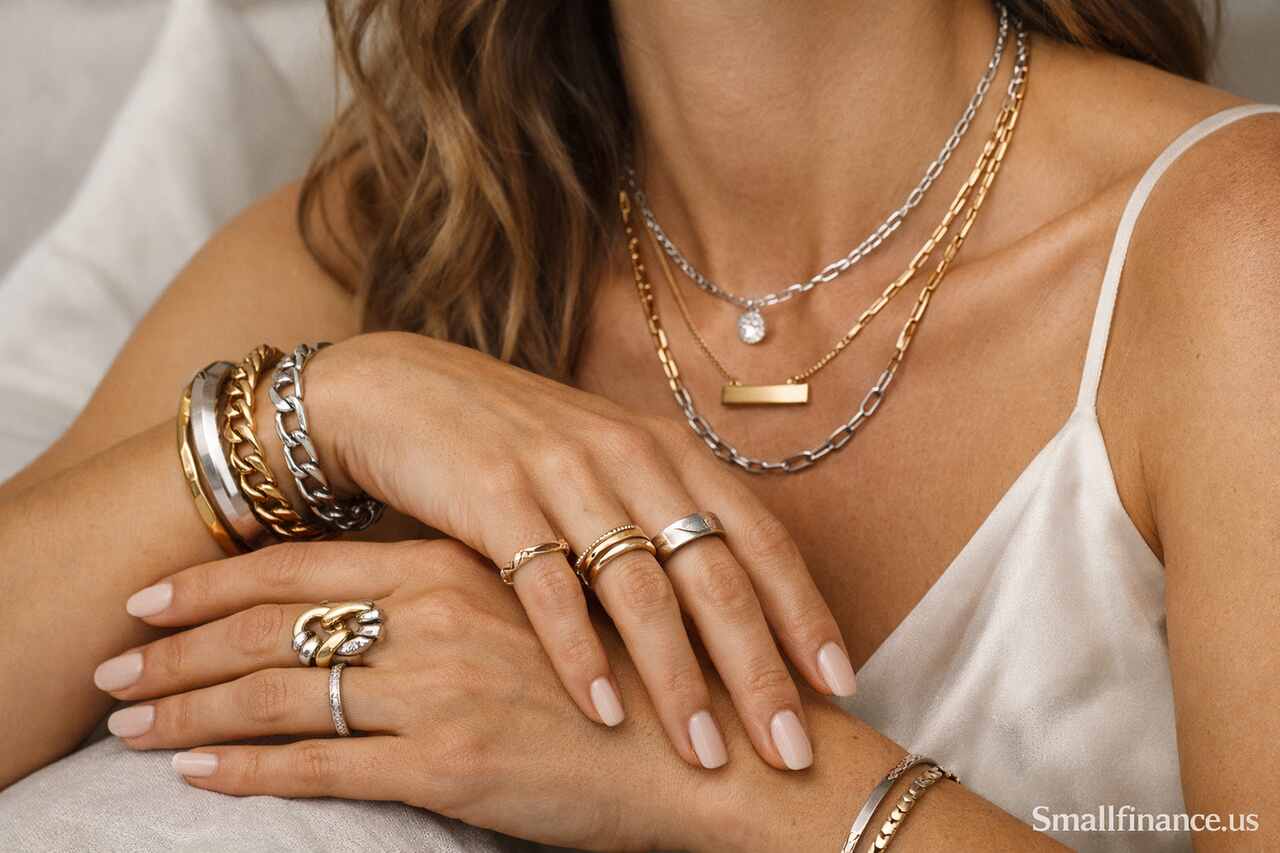
Yes, you can mix silver and gold jewelry, and modern fashion aesthetics not only allow the combination but actively encourage strategic layering of contrasting metal tones. Gold jewelry provides warmth and luminosity, while silver jewelry delivers cool sophistication and reflective neutrality. When combined intentionally, silver and gold jewelry create visual depth, balance, and contemporary elegance. Successful mixing depends on metal undertones, skin tone compatibility, jewelry proportions, design cohesion, and styling structure.
Why Does Mixing Silver and Gold Jewelry Work in Modern Fashion?
Mixing silver and gold jewelry works because contrast generates visual interest, and contrast strengthens aesthetic harmony when guided by proportion and repetition. Fashion psychology connects warm tones like gold with luxury and vitality, while cool tones like silver express clarity and refinement. The combination forms chromatic balance, which aligns with current minimalist and maximalist trends alike.
Modern jewelry styling rejects rigid metal-matching rules and replaces them with cohesion-based design logic. Cohesion develops when repeated shapes, shared textures, or balanced layering unify mixed metals. Silver earrings paired with a gold necklace appear intentional when a bracelet incorporates both metals. Harmony emerges from repetition, and repetition supports visual integration.
Silver and gold mixing also aligns with contemporary capsule wardrobes. Neutral clothing palettes such as black, white, beige, navy, and gray accommodate both metals simultaneously. Fashion stylists often treat mixed-metal jewelry as a bridge element that ties accessories together across seasons.
How Do Gold Jewelry Characteristics Influence Styling Decisions?
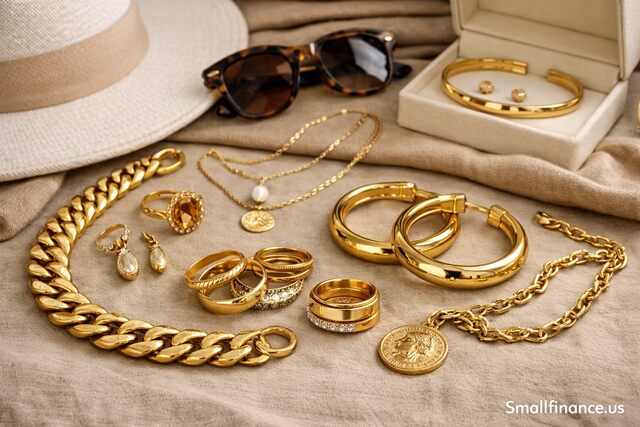
Gold jewelry carries warm undertones, high reflectivity, and symbolic associations with luxury and status. Gold purity levels such as 10K, 14K, 18K, and 24K influence color saturation and durability. Lower karat gold contains alloy metals, which reduce softness and deepen color variation.
Yellow Gold
Yellow gold displays a classic warm tone and complements earthy palettes. Yellow gold works well with warm skin undertones and autumn-inspired clothing colors such as rust, olive, and burgundy. When mixing with silver, yellow gold should anchor the look through a dominant piece like a pendant or watch.
White Gold
White gold contains palladium or nickel alloys, which lighten the tone and produce a silvery finish. White gold acts as a transitional metal between silver and yellow gold. White gold rings often facilitate seamless mixing because color contrast remains subtle.
Rose Gold
Rose gold contains copper alloys, which create a pink hue. Rose gold introduces warmth without overpowering silver. When layered with silver bracelets, rose gold adds dimension while maintaining softness.
Gold-Plated Jewelry
Gold-plated jewelry features a thin gold layer over base metal such as brass or stainless steel. Gold plating allows affordable experimentation with mixed-metal styling. Durability depends on plating thickness, which affects long-term color retention.
How Does Silver Jewelry Complement Gold in Mixed Styling?
Silver jewelry introduces cool brightness, high shine, and versatile neutrality. Sterling silver, stainless steel, and platinum-toned finishes represent primary silver categories. Silver acts as a grounding metal when paired with gold.
Sterling Silver
Sterling silver contains 92.5% pure silver and 7.5% alloy metals, typically copper. Sterling silver provides durability and maintains a luminous white sheen. When layered with gold chains, sterling silver adds brightness that offsets gold’s warmth.
Stainless Steel
Stainless steel offers affordability and tarnish resistance. Stainless steel works well for layered necklaces or stacked rings because durability supports daily wear. Stainless steel blends effectively with minimalist gold pieces.
Platinum-Toned Silver
Platinum-toned finishes resemble high-end jewelry aesthetics. Platinum color enhances luxury perception when combined with 18K gold. Designers frequently use platinum and gold combinations in engagement rings.
Oxidized Silver
Oxidized silver features a darker patina finish. Darkened silver creates dramatic contrast when paired with polished gold. Contrast strengthens focal points in statement jewelry.
What Styling Principles Ensure Balanced Mixed-Metal Looks?
Balanced mixed-metal styling depends on proportion, repetition, focal points, and distribution. Stylists follow structured guidelines to avoid randomness.
1. Establish a Dominant Metal
One metal should lead visually. A gold necklace paired with subtle silver rings maintains hierarchy. Hierarchy prevents visual chaos.
2. Repeat Both Metals
Repetition distributes color evenly. A silver bracelet and silver earrings paired with a gold pendant create rhythm.
3. Use a Bridging Piece
A two-tone watch or ring integrates both metals within a single item. Bridge pieces unify the overall look.
4. Layer Strategically
Layering chains of different lengths ensures separation and clarity. Separation prevents visual overcrowding.
Which Jewelry Types Mix Best in Silver and Gold Combinations?
Different jewelry categories respond differently to mixed-metal styling. Some pieces naturally integrate contrast better than others.
| Jewelry Type | Mixing Effectiveness | Styling Strategy | Best Use Case |
| Necklaces | High | Layer varying lengths | Casual to formal |
| Rings | Very High | Stack alternating metals | Daily wear |
| Bracelets | High | Combine bangles + chains | Office style |
| Earrings | Moderate | Keep symmetrical balance | Minimal looks |
| Watches | Very High | Use two-tone design | Professional wear |
Necklaces perform strongly because layering supports depth. Rings excel because stacking creates structured repetition. Earrings require subtlety because face framing demands balance.
How Does Skin Undertone Influence Mixed Metal Styling?
Skin undertone determines metal harmony. Undertones fall into warm, cool, and neutral categories. Mixed metals benefit neutral undertones most naturally.
| Skin Undertone | Recommended Dominant Metal | Secondary Accent Metal |
| Warm | Yellow Gold | Silver |
| Cool | Silver | Gold |
| Neutral | Balanced Mix | Balanced Mix |
Warm undertones pair strongly with gold due to color resonance. Cool undertones enhance silver brightness. Neutral undertones allow equal distribution without visual conflict.
Undertone identification involves observing wrist veins, sun reaction, and natural complexion hue. Greenish veins suggest warm undertones, bluish veins indicate cool undertones.
What Are the Advantages and Disadvantages of Mixing Silver and Gold Jewelry?
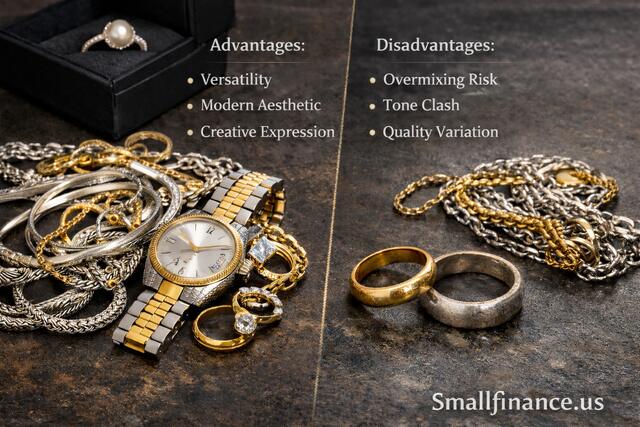
Advantages
- Versatility
Mixed metals match diverse outfits. Versatility increases wardrobe flexibility.
- Modern Aesthetic
Mixed jewelry reflects contemporary fashion values. Modern styling rejects rigid matching rules.
- Creative Expression
Metal contrast enables individuality. Personal identity strengthens through custom layering. - Investment Optimization
Existing jewelry collections become more usable when mixed rather than separated.
Disadvantages
- Overmixing Risk
Excessive layering creates clutter. Clutter reduces elegance.
- Tone Clash
Poor balance between warm and cool tones creates dissonance.
- Quality Variation
Combining high-karat gold with low-quality silver may appear inconsistent.
How Can Readers Apply Mixed Metal Jewelry in Daily Life?
Daily application begins with simplicity. Start by pairing a gold necklace with silver rings. Observe balance. Gradually incorporate layered bracelets or stacked bands. Office attire benefits from two-tone watches. Casual outfits support layered chains.
Professional settings require subtle integration. Choose minimal pieces with clean lines. Evening events allow bold contrasts such as oxidized silver cuffs with gold statement earrings.
Travel wardrobes benefit significantly from mixed metals because fewer pieces create more combinations.
What Is the Future Scope of Mixed Metal Jewelry Trends?
Jewelry designers increasingly create integrated two-tone collections. Sustainable jewelry brands use recycled silver and ethically sourced gold. Customization platforms allow personalized metal ratios.
Technology-driven jewelry design using 3D printing enhances structural experimentation. Fashion cycles continue favoring personalization, which strengthens mixed-metal longevity.
Luxury brands incorporate bi-metal watches and engagement rings, indicating permanent trend adoption rather than seasonal fluctuation.
Conclusion
Mixing silver and gold jewelry represents a modern styling strategy rooted in balance, repetition, and intentional contrast. Gold jewelry provides warmth and symbolic richness, while silver jewelry delivers clarity and versatility. Successful mixing depends on proportional layering, undertone awareness, and design cohesion. Mixed-metal styling increases wardrobe flexibility, supports creative expression, and aligns with contemporary fashion psychology. Strategic implementation transforms separate jewelry collections into unified aesthetic statements.
FAQ
Can silver and gold jewelry be worn together formally?
Formal settings support mixed metals when balance remains subtle. Two-tone watches or layered delicate necklaces maintain sophistication.
Does mixing metals reduce elegance?
Elegance depends on proportion and cohesion rather than metal uniformity. Intentional repetition enhances refinement.
Should one metal dominate the look?
Dominance improves visual clarity. One metal should anchor while the other supports.
Can engagement rings mix silver and gold?
Two-tone engagement rings combine white gold, yellow gold, or platinum. Mixed engagement rings reflect personalization trends.
Is mixing metals suitable for minimalist style?
Minimalist style benefits from controlled layering. Thin chains and slim rings maintain simplicity while incorporating contrast.
