

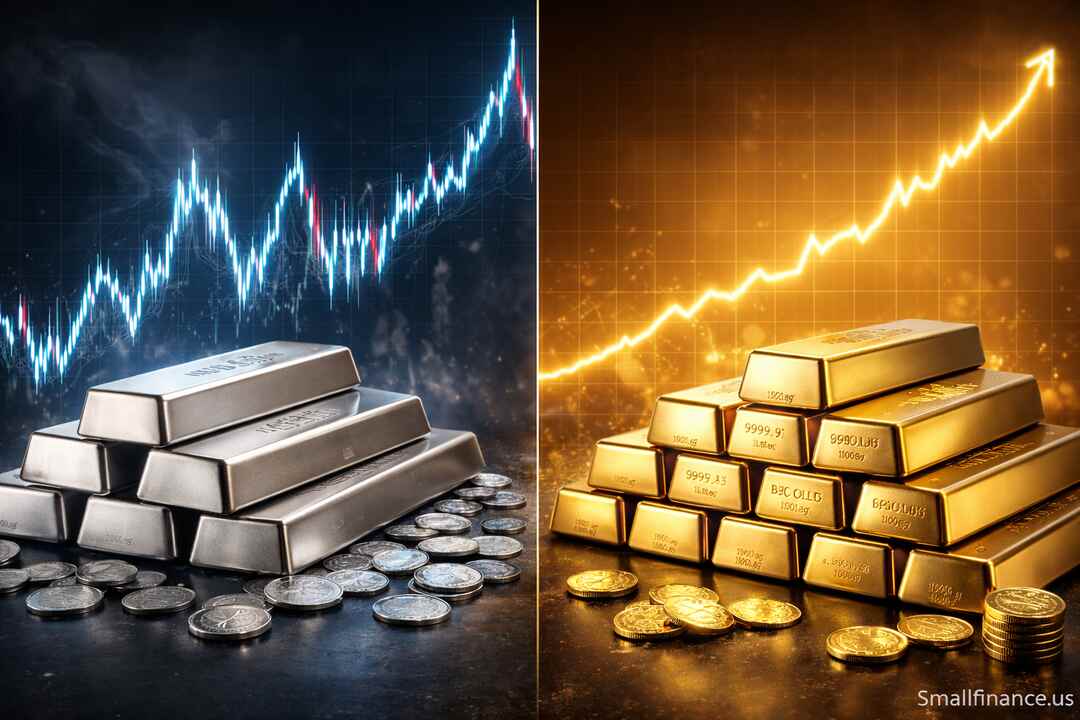
GOLD and SILVER prices became less volatile on Tuesday after undoing one-half and one-fourth of last week’s historic price drops, respectively. This came after prices surged to multi-year highs.
Gold’s price closed today with a range of less than $70 between its high and low points above $5,000 an ounce. This was the narrowest range seen during the week since Monday, January 19.
In the meantime, silver went from a high of $80 an ounce to a low of $2.40 an ounce above that price. It was trading in its narrowest Dollar range since Christmas Day, but it still went up and down by more than twice as much as it did every day over the past year.
The US Dollar price of gold has been 54.8% more volatile over the last month than it has been over the last 21 trading days, compared to its long-term average of 16.3%. This is the most volatile time for the “safe haven” since the panic phase of the global financial crisis during the fall of Lehman Brothers in 2008.
Last month, London silver bullion prices were volatile by 44.6%, which was already close to twice their long-term average. Today, they are volatile by more than 126%, which is what former Tokyo trader Bruce Ikemizu of the Japan Bullion Market Association calls “a terrifying level.”
Long-term, silver’s price has been going up and down for 21 trading days in a row, setting new all-time highs. This is the most volatile one-month price change for the valuable metal in almost 39 years, when it rose by 31.6% in just two days and then dropped back down again the next day.
“Investors have found silver again,” a rare metals advisor told the LA Times on April 27, 1987.”Historically, silver is still cheap,” a bank trader told the paper, adding that there are hints that supply is getting tight and demand is high.
But on April 28, 1987, the head of precious metals trading at Goldman Sachs’ J.Aron unit told the New York Times, “It was chaotic…a very emotional day.” This was after silver prices dropped and the Dollar rose on the foreign exchange market after the Reagan White House said they wanted the US dollar to gain value.A representative from the Swiss bank UBS in New York said, “Everyone was so bullish that they all loaded up.”As soon as the selling began, there were no takers. It was complete chaos.”
In February 2026, “this exceptionally high volatility [in precious metals] is likely to have affected investor confidence,” says a report from the Commerzbank financial services group in Germany.Some people are buying on dips now that the markets have calmed down, says Aakash Doshi, global head of gold strategy at State Street, one of the biggest asset managers in the US.I believe that last week’s crash was more of a technical fix in the end. The markets were stretched and overextended, but not always overowned. I believe that is a major difference.A note from the Swiss bank UBS says that the direct cause of the changes was Kevin Warsh’s nomination in late January to lead the Federal Reserve. This “eased fears that the appointment of a more dovish candidate could accelerate the recent weakening of the US Dollar.”US President Trump told Fox News overnight that he “made a mistake” by choosing Jerome Powell over Warsh in 2018. He said, “He’s going to be great, he’s a really good person.”If he does the job he can, we can grow by 15% or even more.
The US job report is due on Wednesday and the inflation report is due on Friday. Today’s US retail sales numbers, which showed a 0% change from November to December, were not what analysts were expecting.
“The recent bout of volatility has called into question the value of gold as a hedge against geopolitical and market swings,” says UBS of the precious metals market today.We think these worries are overblown and that gold will start to rise again.
