

Highlights
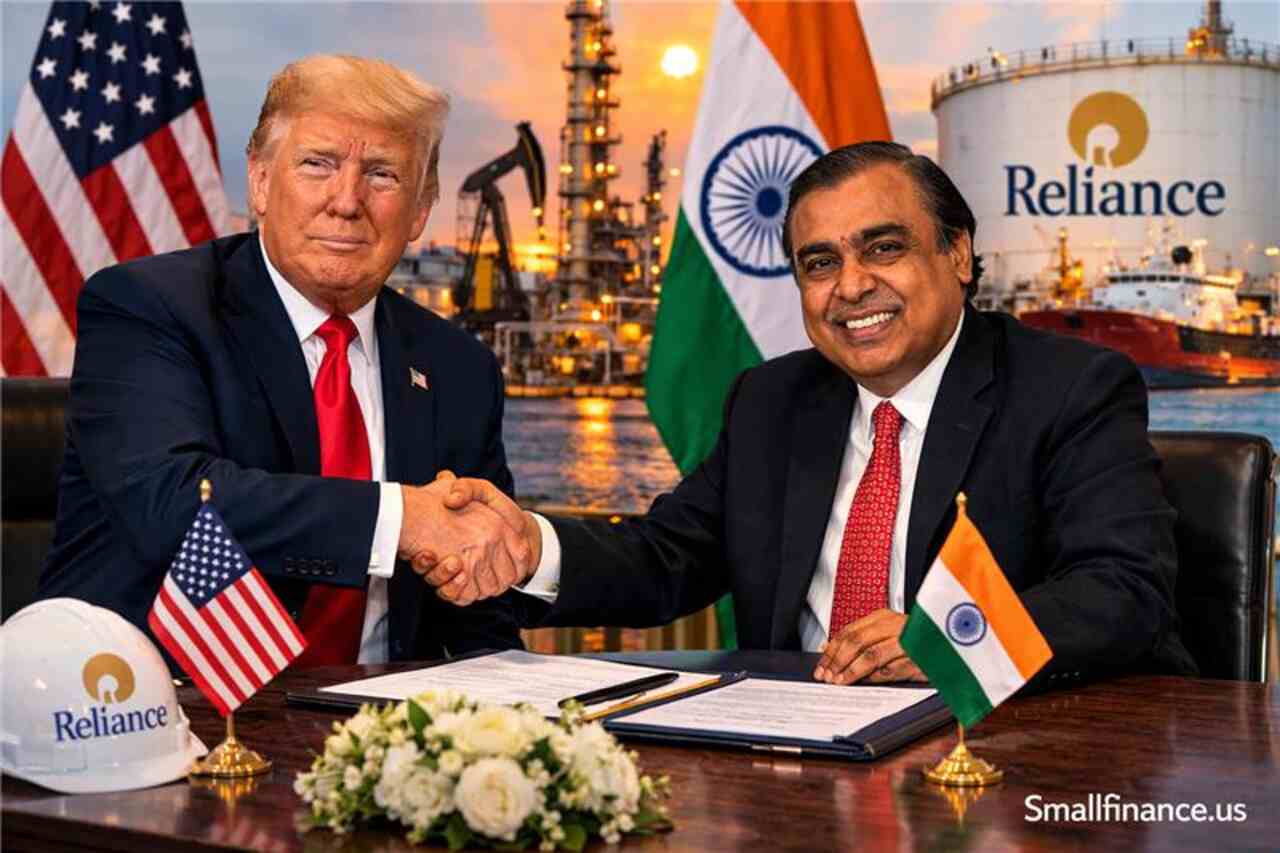
- Donald Trump highlights a major energy partnership between the United States and India, presenting the refinery cooperation as a strategic step toward expanding bilateral oil trade and strengthening economic ties between the two large economies.
- Reliance Industries emerges as the key corporate player in the deal. The Indian energy giant, led by Mukesh Ambani, operates the world’s largest refining complex and seeks stronger crude supply partnerships with American producers.
- U.S. shale oil producers gain a stable export market because Indian refineries increasingly import crude from American energy basins. Rising demand from India creates new opportunities for U.S. energy companies and supports long-term crude export growth.
- India strengthens energy security through large-scale refining capacity. High-capacity refineries allow India to import crude oil, process petroleum domestically, and export refined fuels such as gasoline, diesel, and jet fuel to global markets.
- The refinery cooperation reinforces U.S.–India strategic relations. Energy trade often serves as a foundation for wider diplomatic cooperation involving technology, infrastructure investment, and geopolitical alignment in the Indo-Pacific region.
- Global oil markets may shift as India expands its role as a refining hub. Growing collaboration between American crude suppliers and Indian refiners increases competition with refining centers in Asia and the Middle East.
- Energy infrastructure investment could follow the deal. New supply agreements encourage development of ports, storage terminals, and shipping logistics that connect U.S. crude exports with Indian refining facilities.
- The broader story centers on energy diplomacy and economic growth. Stronger petroleum trade links between the United States and India illustrate how global energy partnerships influence geopolitics, industrial development, and long-term energy security.
What Strategic Role Does Reliance Industries Play in the U.S.–India Oil Refining Agreement?
Reliance Industries functions as the central corporate entity connecting India’s refining capacity with U.S. crude supply and downstream energy investment. The conglomerate, led by chairman Mukesh Ambani, operates one of the world’s largest refining complexes and frequently integrates upstream sourcing, petrochemical manufacturing, and international energy trade. The refinery partnership highlighted by Donald Trump emphasizes Reliance Industries’ growing influence in global energy infrastructure.
How Does Reliance Industries Operate One of the World’s Largest Refining Ecosystems?
Reliance Industries manages the Jamnagar refining complex in India, a facility recognized as the largest oil refining hub globally. Jamnagar processes heavy and light crude varieties sourced from multiple regions, including the United States, the Middle East, and Africa. Processing capacity exceeds 1.2 million barrels per day, enabling conversion of crude oil into high-value petroleum products such as gasoline, jet fuel, diesel, and petrochemicals.
Large-scale refining capacity strengthens Reliance’s bargaining power within international crude markets. Global traders often prioritize supply contracts with high-capacity refineries because consistent demand stabilizes export volumes. Stable export volumes reinforce energy trade relationships between U.S. shale producers and Indian refiners, which forms the economic foundation behind the refinery collaboration promoted by Donald Trump.
How Does Reliance Industries Integrate Upstream and Downstream Energy Markets?
Reliance Industries links upstream crude acquisition with downstream petrochemical manufacturing. Upstream supply chains involve crude imports from American shale basins such as the Permian Basin and Eagle Ford formations. Downstream conversion transforms crude feedstock into polymers, synthetic fibers, packaging materials, and transportation fuels.
Integrated energy architecture increases operational efficiency because petrochemical margins often offset fluctuations in crude prices. Fluctuating crude prices influence refining profitability, while petrochemical demand stabilizes revenue during oil market volatility. Strategic integration therefore makes Reliance Industries an attractive partner for U.S. energy producers seeking stable export demand.
How Does Reliance Strengthen India’s Energy Security?
Reliance Industries contributes significantly to national energy security for India. India remains the world’s third-largest oil importer, and refining capacity plays a crucial role in reducing vulnerability to global supply disruptions. Large domestic refining capacity enables India to import crude oil, refine petroleum domestically, and export refined products to Asia, Europe, and Africa.
Export capability enhances geopolitical leverage because refined fuel exports generate trade revenue and strengthen diplomatic relationships with energy-dependent economies. Economic leverage derived from refined fuel exports encourages strategic energy cooperation between India and the United States.
How Does Reliance Influence Global Petroleum Trade Networks?
Reliance Industries operates as a major hub within global petroleum trade networks. International shipping routes connect Jamnagar with the Persian Gulf, U.S. Gulf Coast terminals, and European fuel markets. Maritime logistics networks facilitate continuous crude imports and refined product exports.
Global logistics integration creates demand for stable crude supply agreements with U.S. producers. Stable supply agreements benefit American shale companies by providing long-term buyers for crude oil production, reinforcing the commercial logic behind Trump’s promotion of refinery cooperation.
Why Did Donald Trump Promote the U.S.–India Refinery Partnership?
Donald Trump promoted the refinery partnership as evidence of strengthening economic ties between the United States and India. Energy cooperation represents a key pillar within bilateral trade relationships because crude exports, refinery investment, and fuel trade collectively generate billions of dollars in cross-border commerce.
How Does the Partnership Support U.S. Energy Export Strategy?
U.S. energy policy increasingly emphasizes crude export expansion. The shale revolution transformed the United States into one of the world’s largest oil producers. Production growth from shale basins created surplus crude supply, encouraging American producers to pursue overseas buyers.
Indian refiners represent a valuable market because India’s energy consumption continues rising with industrialization and urbanization. Expanding refinery cooperation ensures long-term demand for U.S. crude exports, strengthening American energy dominance narratives frequently emphasized by Donald Trump during policy discussions.
How Does Energy Diplomacy Strengthen U.S.–India Strategic Relations?
Energy diplomacy functions as a bridge connecting economic cooperation with geopolitical strategy. Crude supply agreements create long-term trade dependencies that encourage diplomatic alignment between partner nations. Stronger energy relationships often translate into broader cooperation in defense, technology, and infrastructure.
Strategic alignment between the United States and India also influences regional geopolitics within the Indo-Pacific region. Energy trade therefore operates not only as an economic exchange but also as a strategic tool shaping international alliances.
How Does Trump’s Messaging Appeal to American Energy Producers?
Donald Trump frequently framed energy deals as victories for American industry. Messaging around refinery agreements highlights job creation in oil production, transportation, and export infrastructure sectors. Pipeline operators, port terminals, and shipping companies benefit from increased crude export volumes.
Domestic political messaging therefore connects international energy agreements with economic growth narratives inside the United States. Political communication surrounding refinery partnerships often emphasizes industrial competitiveness and energy independence.
How Does the Deal Reflect Broader Trade Negotiations Between the U.S. and India?
Energy trade agreements frequently appear alongside broader trade negotiations involving tariffs, technology transfer, and manufacturing investment. Refinery cooperation demonstrates mutual economic benefit, which may ease tensions surrounding other trade disputes.
Mutual economic benefit encourages policymakers to pursue collaborative agreements in sectors such as digital infrastructure, pharmaceuticals, and defense manufacturing. Energy cooperation therefore acts as a stabilizing factor in complex trade relationships between major economies.
How Could the U.S.–India Refinery Collaboration Reshape Global Energy Markets?
The refinery partnership highlighted by Donald Trump signals deeper integration between American crude producers and Indian refining infrastructure. Global energy markets increasingly depend on cross-border supply chains that connect extraction regions, refining hubs, and consumption centers.
How Does U.S. Shale Oil Fit into India’s Refining Demand?
U.S. shale oil offers light-sweet crude characteristics suitable for blending with heavier crude grades. Indian refiners often combine multiple crude varieties to optimize refining efficiency and product yield. Shale oil blending improves gasoline and petrochemical output during refining operations.
Growing compatibility between shale crude and advanced refining technology strengthens trade flows between the United States and India. Stronger trade flows increase stability within global oil supply chains.
How Does India’s Fuel Demand Influence Global Oil Consumption?
India ranks among the fastest-growing energy consumers worldwide. Rapid urbanization, industrial expansion, and rising vehicle ownership drive increasing demand for gasoline, diesel, and aviation fuel. Expanding refinery capacity ensures domestic production meets rising consumption levels.
Rising fuel demand also attracts international suppliers seeking reliable buyers. U.S. exporters view India as a long-term growth market within the global petroleum economy.
How Could the Partnership Affect Global Refining Competition?
Large-scale refinery agreements increase competition among global refining hubs located in Singapore, South Korea, and the Middle East. Competitive refining capacity influences fuel pricing, export margins, and shipping routes.
Enhanced collaboration between U.S. crude exporters and Indian refiners may strengthen India’s position as a dominant refining hub serving Asia and Africa. Market leadership within refining often translates into broader economic influence across regional energy markets.
How Does Energy Infrastructure Investment Shape Future Oil Trade?
Energy partnerships often stimulate infrastructure investment such as port expansions, storage terminals, pipelines, and petrochemical plants. Infrastructure development improves supply chain resilience and reduces transportation costs.
Improved logistics infrastructure benefits both American exporters and Indian refiners. Strong infrastructure networks enable efficient crude shipment from U.S. production basins to Indian refining complexes, reinforcing long-term energy cooperation.
Why Does the U.S.–India Energy Relationship Matter for Global Energy Security?
The energy relationship between the United States and India strengthens diversification within global oil supply networks. Diversified supply networks reduce dependence on any single exporting region and enhance resilience against geopolitical disruptions.
Growing collaboration between American crude producers and Indian refiners therefore contributes to a more balanced and interconnected global energy system. Strategic cooperation involving major economies such as the United States and India continues shaping the future of international petroleum markets, refinery investment, and long-term energy security.
