

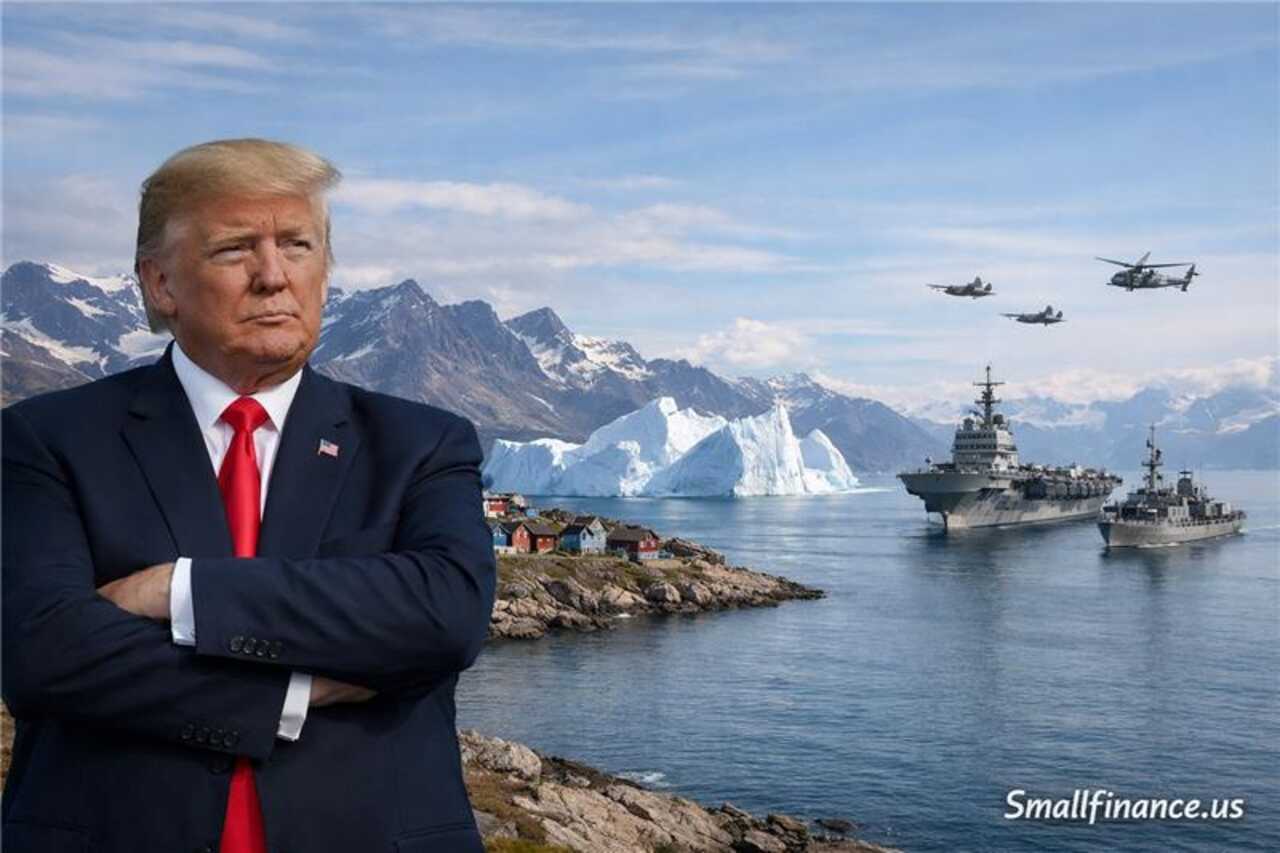
What Is the Strategic Framework Between Trump and NATO Over Greenland?
The strategic framework introduced by Donald Trump at the World Economic Forum outlines a NATO-aligned Arctic security initiative involving Greenland. Trump confirmed the existence of a “framework for a future deal” designed to solidify U.S. and NATO control over key Arctic pathways, diminishing growing Russian and Chinese influence in the region. This framework allowed him to rescind earlier tariff threats against European allies resistant to prior Greenland proposals.
The deal was positioned as a “mutual understanding” with NATO Secretary General Mark Rutte, emphasizing a long-term vision. Although lacking legislative detail, the framework strategically links Greenland’s geographic position to a broader Arctic defense plan. The primary goal centers on securing Arctic transit zones, protecting emerging trade corridors, and establishing a dominant NATO presence north of the Atlantic.
Does the Deal Include U.S. Ownership or Sovereignty Over Greenland?
No confirmed clause in the framework grants the U.S. ownership or sovereignty over Greenland. Trump’s statements remain deliberately vague on this point, asserting only that discussions are “complex” and “long-term.” Ownership of Greenland was not mentioned explicitly by either party involved in the talks.
Greenland’s legal status remains that of an autonomous territory within the Kingdom of Denmark. Danish Prime Minister Mette Frederiksen reiterated that Greenland’s sovereignty is non-negotiable and not subject to external frameworks or third-party discussions. The constitutional relationship between Denmark and Greenland prohibits unilateral decisions on territorial transfer, ensuring any future arrangement must go through both Greenlandic and Danish approval.
How Does the Framework Affect Arctic Military and Security Planning?
The Greenland deal is embedded within a broader Arctic defense recalibration initiated by NATO and endorsed by the U.S. NATO allies, led by Secretary General Rutte, committed to accelerating defense posture enhancement across Arctic territories. The framework prioritizes early-warning systems, integrated missile defense, and real-time Arctic intelligence sharing between member states.
The Arctic region’s strategic value has increased due to melting ice caps opening new sea routes and exposing untapped resources. Russia’s militarization of its Arctic border and China’s expanding Arctic logistics networks have escalated security risks. In response, NATO will deploy additional surveillance assets and coordinate military readiness exercises north of the Arctic Circle, with Greenland acting as a forward-operating node.
What Economic and Strategic Interests Are Embedded in the Deal?
Trump’s interest in Greenland is largely tied to its untapped resource value, mineral reserves, and defense logistics advantages. Greenland holds vast quantities of rare-earth elements essential to the global tech economy. Additionally, its location provides proximity to Arctic shipping lanes and missile-defense corridors, making it a key component in future economic and defense infrastructure.
The proposed deal indirectly touches on these assets by embed ding them into a multilateral NATO development framework. While Rutte denied direct conversations about mineral exploitation, U.S. defense officials have long pointed to Greenland as vital for satellite tracking, air defense installations, and radar operations. The U.S. Thule Air Base, located in northwest Greenland, remains a cornerstone of American strategic presence in the High North.
How Have Denmark and Greenland Responded to the Proposed Framework?
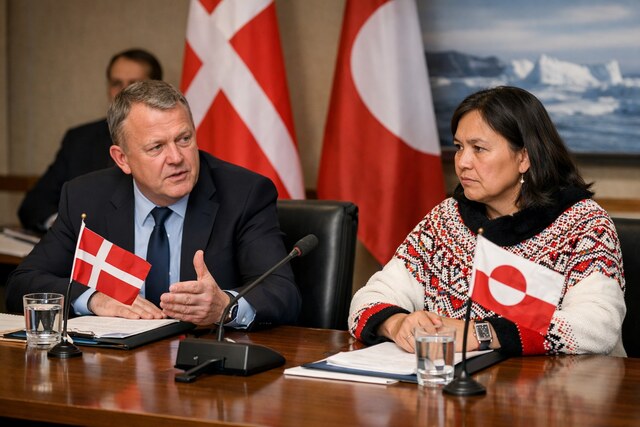
Denmark’s government has strongly emphasized Greenland’s self-determination and rejected any unilateral negotiations over its territory. Officials clarified that neither Denmark nor Greenland was part of the recent Davos discussions. Greenland’s leaders have reinforced their autonomy under the Act on Greenland Self-Government, which grants full authority over natural resources and internal governance.
Greenlandic politicians, particularly those aligned with pro-independence parties, have expressed skepticism toward any framework perceived as bypassing their democratic processes. Local leaders view U.S. interest in Greenland as driven more by extraction and militarization than mutual development. Any deal excluding Greenlandic participation risks political backlash and erosion of trust within the Kingdom of Denmark.
How Are European and NATO Allies Reacting to Trump’s Greenland Strategy?
European responses have been cautiously optimistic but guarded against future unilateral moves by the U.S. NATO members welcomed the withdrawal of Trump’s tariff threats but have insisted on collective decision-making and legal transparency in Arctic dealings. Countries like Norway, Iceland, and Canada—each with Arctic territories—stress that any defense alignment must also reflect environmental stewardship and indigenous rights.
Diplomats across the EU remain vigilant about the precedent set by involving a semi-autonomous region in high-level geopolitical negotiations. They emphasize that Arctic governance must align with international law, including the United Nations Convention on the Law of the Sea (UNCLOS), rather than hinge on strategic frameworks led by any single NATO member.
What Are the Next Steps in the Greenland Deal Negotiation Process?
The Greenland-NATO framework currently functions as a strategic outline, pending multilateral negotiations and formalization. Trump has indicated that follow-up discussions with Denmark, Greenland, and NATO leadership will take place in early 2026. These talks are expected to detail defense logistics, intelligence-sharing protocols, and Arctic development opportunities.
The framework’s ambiguous nature means that diplomatic interpretation will shape its evolution. Greenlandic participation is essential for legitimacy, while Danish constitutional law will dictate any further advancement. NATO defense ministers are preparing a joint Arctic readiness report to define military integration points, likely placing Greenland at the center of long-range strategy and sustainability discussions.
Conclusion: How Does the Framework Reshape Arctic Geopolitics?
Trump’s framework over Greenland signals a recalibrated Arctic strategy where defense, diplomacy, and resource security intersect. The U.S. aims to secure leadership within Arctic NATO operations, using Greenland’s strategic assets as leverage. However, without Greenlandic and Danish consent, the deal risks stalling in diplomatic deadlock.
The success of the framework will depend on its transformation from abstract vision into actionable policy that respects sovereignty, supports regional security, and aligns with global environmental standards. Greenland’s role in Arctic geopolitics has been permanently elevated—whether or not ownership is ever on the table.
Read Next: Trump to Sign Executive Order on TikTok Deal as U.S. Sale Nears Approval
