

Highlights
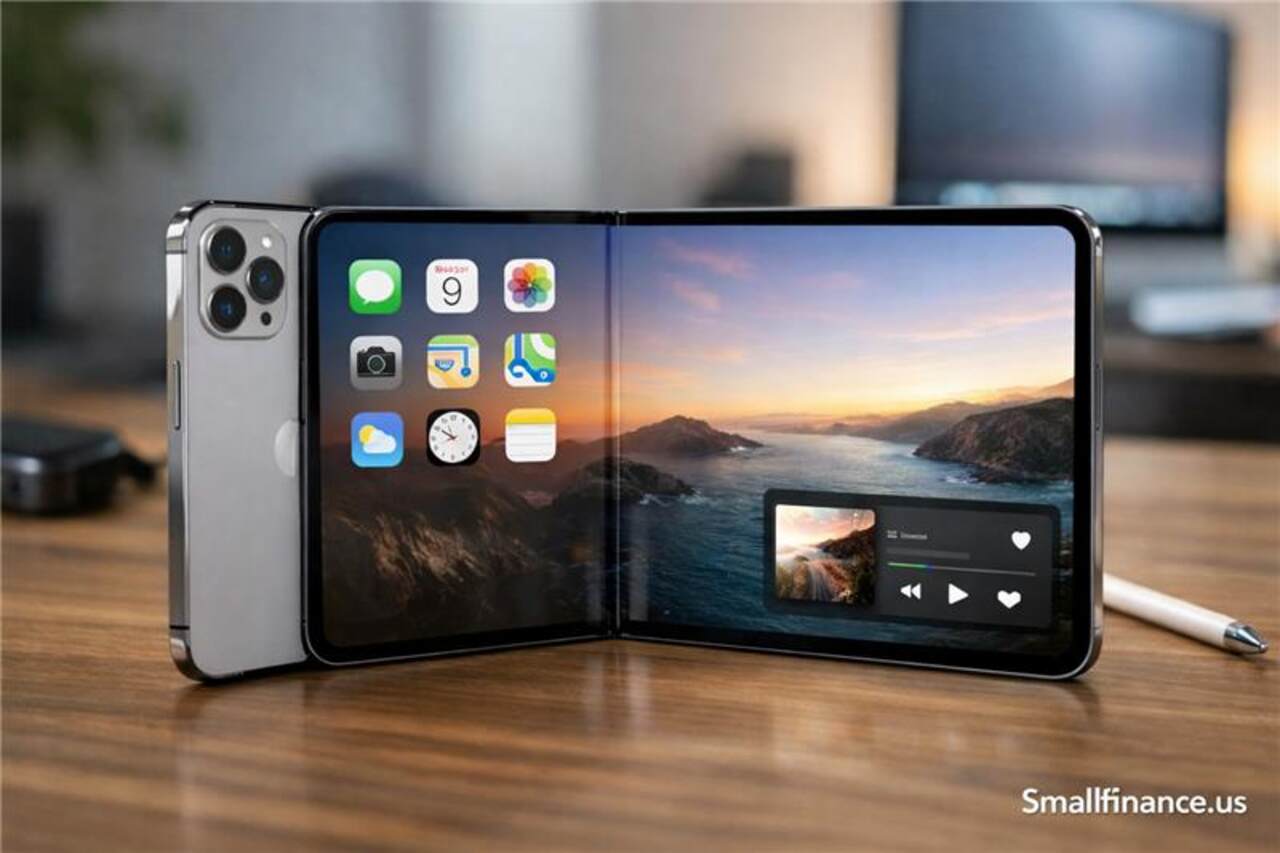
- Apple’s foldable iPhone concept introduces a hybrid device that transforms from a compact smartphone into a larger tablet-style screen, creating a bridge between the iPhone and iPad product categories.
- Flexible OLED display technology enables screen expansion that could reach roughly 7–8 inches when unfolded, providing a larger workspace for reading, streaming, gaming, and productivity tasks.
- Advanced hinge engineering supports durability and multi-angle usage, allowing the device to function in different modes such as handheld phone mode, tablet mode, and partially folded viewing mode.
- iOS and iPadOS interface optimization allows dynamic screen adaptation, meaning applications automatically reorganize layouts when the device unfolds into a larger display environment.
- Apple ecosystem integration strengthens productivity workflows through services like iCloud, Continuity, and Handoff, enabling seamless interaction with MacBook, Apple Watch, and AirPods.
- Multitasking capabilities mirror iPad functionality, including split-screen apps, drag-and-drop features, and expanded workspace for productivity applications.
- Media consumption improves through a larger immersive display, benefiting video streaming platforms, gaming environments, and creative applications like photo editing.
- Apple’s entry into the foldable smartphone market could reshape industry competition, challenging foldable devices already introduced by Samsung, Huawei, and Google.
- Developer opportunities increase as adaptive app design becomes essential, encouraging software optimized for dynamic screen sizes and foldable device interfaces.
What Defines Apple’s Foldable iPhone Concept Within the Smartphone and Tablet Ecosystem?
Apple’s foldable iPhone represents a hybrid device concept where a smartphone form factor expands into a tablet-like interface, connecting the iPhone product line with the iPad ecosystem. Apple’s hardware strategy combines flexible OLED display technology, hinge engineering, and iOS interface optimization to create a single device capable of operating as both a phone and a productivity tablet.
Flexible display technology functions as the central component of the foldable iPhone concept. Apple reportedly integrates a large OLED panel capable of folding without compromising pixel density, color accuracy, or brightness performance. OLED panels enable deep blacks, improved contrast ratios, and thinner display layers, which align with Apple’s design philosophy for lightweight premium devices.
Hinge engineering acts as the structural backbone of the foldable device architecture. Apple’s hinge mechanism likely focuses on durability, crease reduction, and multi-angle positioning. Multi-angle hinges allow users to partially fold the device for laptop-style productivity, video viewing, or FaceTime communication, strengthening the product’s usability across multiple scenarios.
Operating system optimization connects hardware capabilities with user experience. Apple’s iOS and iPadOS frameworks allow dynamic screen scaling when the device unfolds. Interface elements such as app layouts, multitasking panels, and widgets automatically reorganize to use the larger display area, enabling tablet-style workflows within a smartphone device.
Ecosystem integration strengthens the foldable iPhone’s value across Apple’s broader product portfolio. Apple devices such as MacBook, Apple Watch, and AirPods already operate through interconnected services including iCloud, Continuity, and Handoff. A foldable iPhone expands those integrations by offering a larger screen for productivity, media consumption, and cross-device workflows.
How Does Apple’s Foldable Display Technology Transform the iPhone Experience?
Apple’s foldable display technology transforms the iPhone experience by turning a pocket-sized smartphone into a tablet-like computing platform. Display expansion introduces new possibilities for productivity, entertainment, and multitasking.
Large unfolded screen size creates a tablet-style interface similar to the iPad. Reports indicate a display range between 7 and 8 inches when unfolded. Larger screen dimensions allow enhanced activities such as reading documents, editing photos, watching videos, and using split-screen multitasking features.
Multitasking capability becomes a primary advantage of the foldable design. iPad-style multitasking features allow users to run multiple applications simultaneously. Apple software frameworks already support split-view, slide-over windows, and drag-and-drop functions, which adapt naturally to the foldable device’s expanded screen.
Media consumption improves through increased display immersion. Video streaming platforms such as Apple TV+, Netflix, and YouTube benefit from larger screen space, while stereo speaker systems and advanced display brightness enhance cinematic viewing experiences.
Gaming performance receives additional improvements through the larger screen area and Apple Silicon processors. Apple’s A-series chips deliver high graphics performance through Metal API optimization, allowing advanced mobile gaming experiences with console-level visuals.
Creative workflows also gain practical benefits from the larger display. Photo editing applications, drawing apps, and productivity tools perform more effectively on expanded screens, creating a bridge between smartphone convenience and tablet productivity.
Why Does Apple’s Foldable iPhone Strategy Matter for the Global Smartphone Market?
Apple’s foldable iPhone strategy matters because the foldable device category continues to expand within the global smartphone market. Competitors such as Samsung, Huawei, and Google have already introduced foldable smartphones, creating a competitive landscape where Apple’s entry could reshape market demand.
Samsung pioneered the commercial foldable category with the Galaxy Fold and Galaxy Z Fold product lines. Those devices demonstrated consumer interest in foldable technology, although durability challenges and pricing barriers initially limited adoption.
Huawei introduced foldable devices such as the Mate X series, focusing on outward folding displays and premium hardware engineering. Huawei’s designs demonstrated alternative foldable mechanisms and flexible screen architectures.
Google entered the foldable segment with Pixel Fold, integrating Android software optimized for large screens and multitasking. Google’s approach highlighted software adaptability as a key factor in foldable smartphone usability.
Apple’s entry into the foldable segment could accelerate mainstream adoption. Apple historically influences consumer behavior through product ecosystem integration, refined hardware design, and strong developer support.
Developer ecosystem expansion also becomes significant. App developers could design software optimized for dynamic screen sizes, creating new user experiences across productivity, gaming, and creative applications.
Consumer demand for hybrid devices continues to increase as users seek fewer devices capable of performing more functions. A foldable iPhone capable of replacing both a smartphone and a tablet aligns with that demand.
How Could Apple’s Foldable iPhone Influence Future Device Innovation?
Apple’s foldable iPhone could influence future device innovation by redefining the boundaries between smartphones, tablets, and portable computers. Hybrid device categories often emerge when hardware flexibility meets software adaptability.
Hardware innovation would accelerate across display technology and materials engineering. Apple suppliers may develop stronger ultra-thin glass, improved flexible OLED panels, and more durable hinge systems to support foldable device longevity.
Software ecosystems would evolve alongside hardware capabilities. Adaptive interface design may become standard for mobile operating systems, allowing applications to automatically scale across multiple screen sizes and device modes.
Productivity workflows could change as foldable devices provide portable workstations that fit inside pockets. Document editing, multitasking, and remote collaboration become easier when mobile devices provide tablet-level screen space.
Consumer electronics convergence may intensify as foldable designs combine the capabilities of smartphones, tablets, and laptops. Technology companies may explore rollable displays, tri-fold devices, and modular computing platforms as the next stage of mobile innovation.
Apple’s foldable iPhone therefore represents more than a new product category. Apple’s design philosophy suggests a broader shift toward flexible computing devices where hardware adapts to user needs rather than forcing users to adapt to fixed device formats.
