

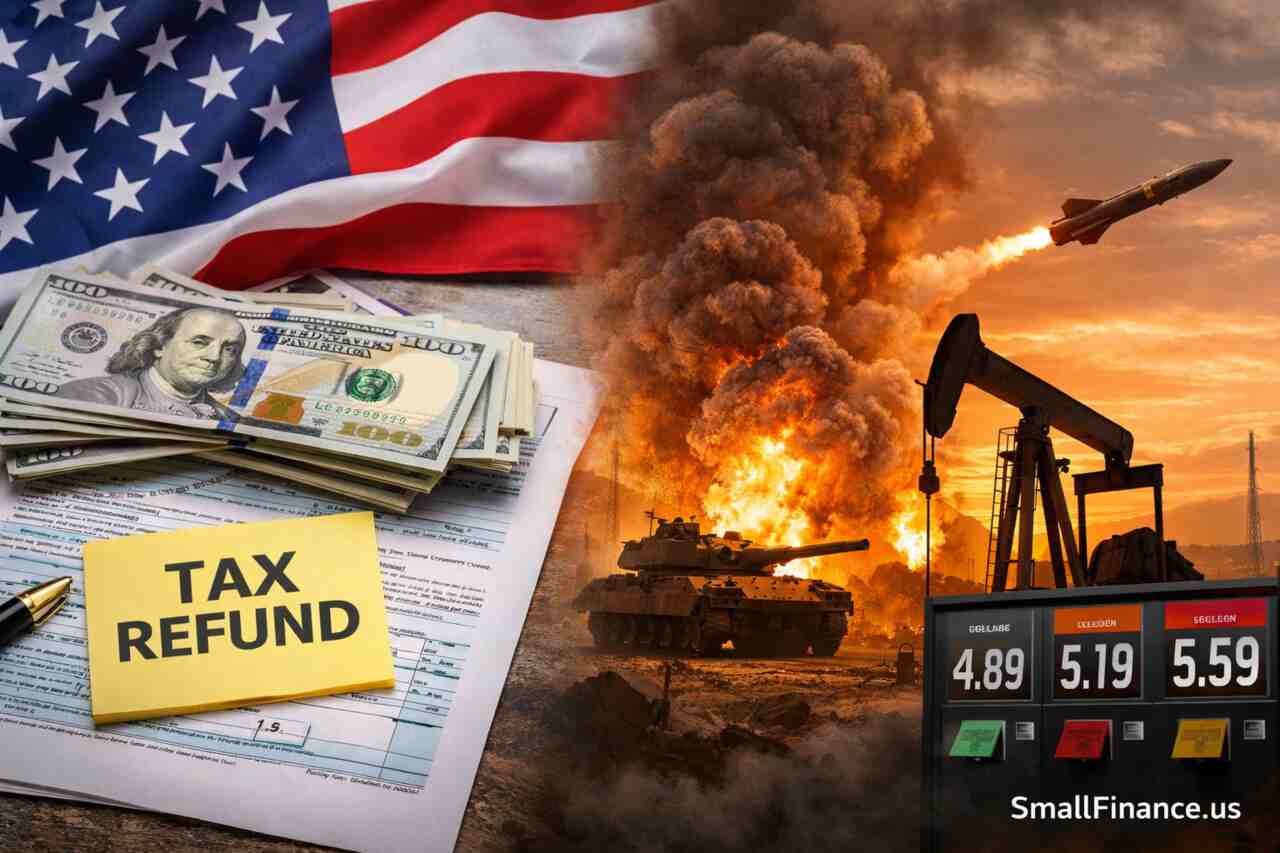
Many Americans are paying more for gas because of the ongoing war in Iran and the lack of travel through the Strait of Hormuz, which is a major route for shipping oil around the world.
Some experts say that this higher cost could cancel out this year’s bigger tax refunds. It depends on how long the war in Iran lasts.
Iran got President Trump’s 15-point plan to end the war on Wednesday. At first, this made the price of crude oil go down. But that drop went away on Thursday when the country turned down the U.S. offer to end the fighting.
At the same time, Americans are still paying more at the gas pump. AAA says that the price of gas across the country was $3.98 a gallon on Thursday, which is about 33% more than it was a month ago.
The extra money that some people got this spring could be lost because of the higher gas prices. According to the most recent IRS figures, the average refund for an individual taxpayer was $3,623 as of March 13. This is about $350 more than the same time last year.
According to William McBride, chief economist at the Tax Foundation, it’s “less likely we’re going to see a major change” before the April 15 tax deadline. This means that the average size of the refund could still change.
Both parties are paying attention to how Americans’ worries about affordability are affecting their tax refunds this year. There are barely any Democrats in the House or Senate before the midterm elections in November.
Based on the changes made by his “big beautiful bill” in 2025, Trump has said that this will be the “biggest tax refund season of all time.”
More tax returns might not be worth it if gas prices go up.
A study from March 18 by experts at the Stanford Institute for Economic Policy Research found that gas prices could reach a high point of $4.36 per gallon in May if the Strait of Hormuz were closed for three weeks and the price of crude oil rose to $110 per barrel in March.
The writers wrote that in that case, higher gas prices might “wipe out most or all of the larger tax refunds on average.”
Based on Goldman Sachs’ baseline Brent crude oil forecast from March 17, the study found that the average U.S. family could pay $740 more for gas by the end of the year, even if demand didn’t change.
In a separate note posted on March 22, Goldman Sachs raised its predictions for oil prices. It said that the price of Brent crude oil would average $110 per barrel from March to April.
Goldman Sachs experts wrote that the U.S. could end military action at any time, which would likely lower the risk premium in the prices of crude and refined goods around the world.
Oxford Economics said in a note on March 20 that if gas prices averaged $3.60 per gallon in 2026, people would spend more on fuel, “almost exactly offsetting the boost from refunds.”
Obviously, the longer the fight goes on, the worse it could be for people at the gas pump.
“The energy shock is going to hit those who have the least cushion… and it doesn’t look like those tax refunds are going to be here to save them,” A left-leaning economic policy think tank’s chief of policy and lobbying, Alex Jacquez, said on a press call Friday.
Read Next: Did Trump Have To Get Congress’s OK to attack Iran? What you need to know
