

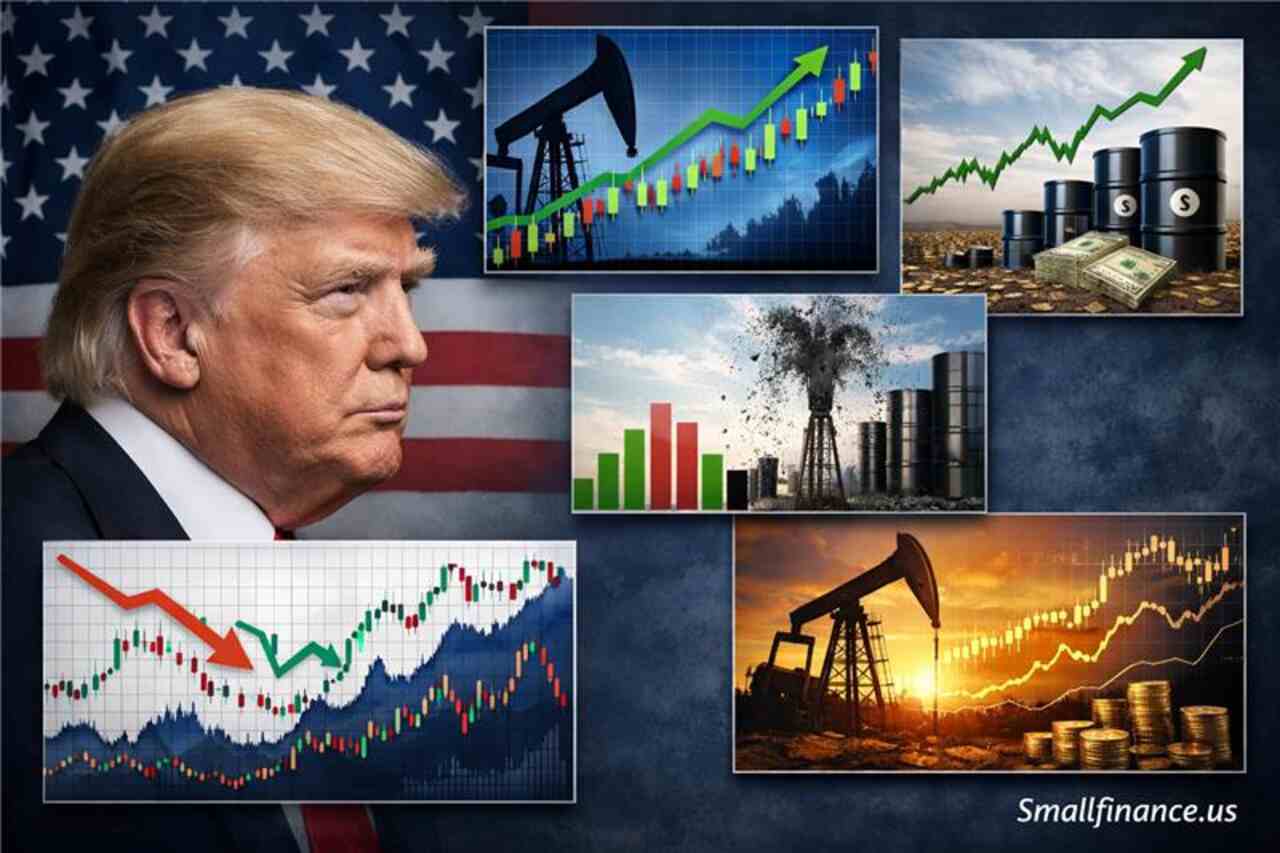
A month into the US and Israel’s plan to attack Iran, it can be hard to figure out what drives Donald Trump.
But it’s clear that he’s keeping an eye on the oil prices.
Price changes used to be big whenever the US president said something or wrote something on social media about his plans. Investors jumped on signs that the conflict could get worse or end.
These days, though, traders seem to be less sure about how useful his words are.
The price of a barrel of oil was around $72 before the strikes on Iran on February 28.
Last week, on March 19, it hit a high point of $118 a barrel. As of Friday afternoon, it was just below $112, which is a big jump from its price before the war.
Here are some times in the past month when Trump and the markets seemed to hit each other, but the results were different each time.
Jonathan Raymond, an investment manager at Quilter Cheviot, says that energy prices have become a proxy for larger global and economic risks. He says that prices rise when Trump talks more aggressively and fall when he talks less strongly.
Given the big economic risks that come with rising oil prices, he says the markets are right to pay attention to those signs.”Investors are trying to figure out how much real uncertainty is worth,” he says. “Markets can look skittish or confused, but what they’re really doing is managing event risk in real time, with oil sitting right at the centre of that.”
Brian Szytel at the Bahnsen Group says that it can be hard for investors to figure out how to trade because some of Trump’s words seem to be meant to affect oil prices rather than explain policy.”The first thing that dies in war is truth,” he says. “I suspect some of the rhetoric back-and-forth around productive talks, and the opposite, very much are centred around just moving the price of oil.”
Why the price of oil is more important than you think
The US stock market dropped the most since the start of the Iran war on Thursday. Right after, Trump said that talks with Iran were “very well” and that he would not attack Iran’s energy infrastructure until at least April 6.
But the price of oil kept going up.
The head of FX strategy at Rabobank, Jane Foley, says that the market is “becoming more muted” because of the “huge gap” between Trump’s reassurances and Tehran’s lack of response.Many investors don’t think the war will end soon because of how it looks, and the markets are still nervous.
Money manager at AJ Bell, Russ Mould, says that markets are also used to Trump “often changing tack at signs of political, stock market, or economic trouble.””A bit of doubt or even outright cynicism is starting to show,” he says.
Naomi Rainey did more reporting.
What the heck is going on with the price of oil?
Read Next: Trump Highlights U.S.–Reliance Energy Refinery Deal as India–US Oil Partnership Expands
