

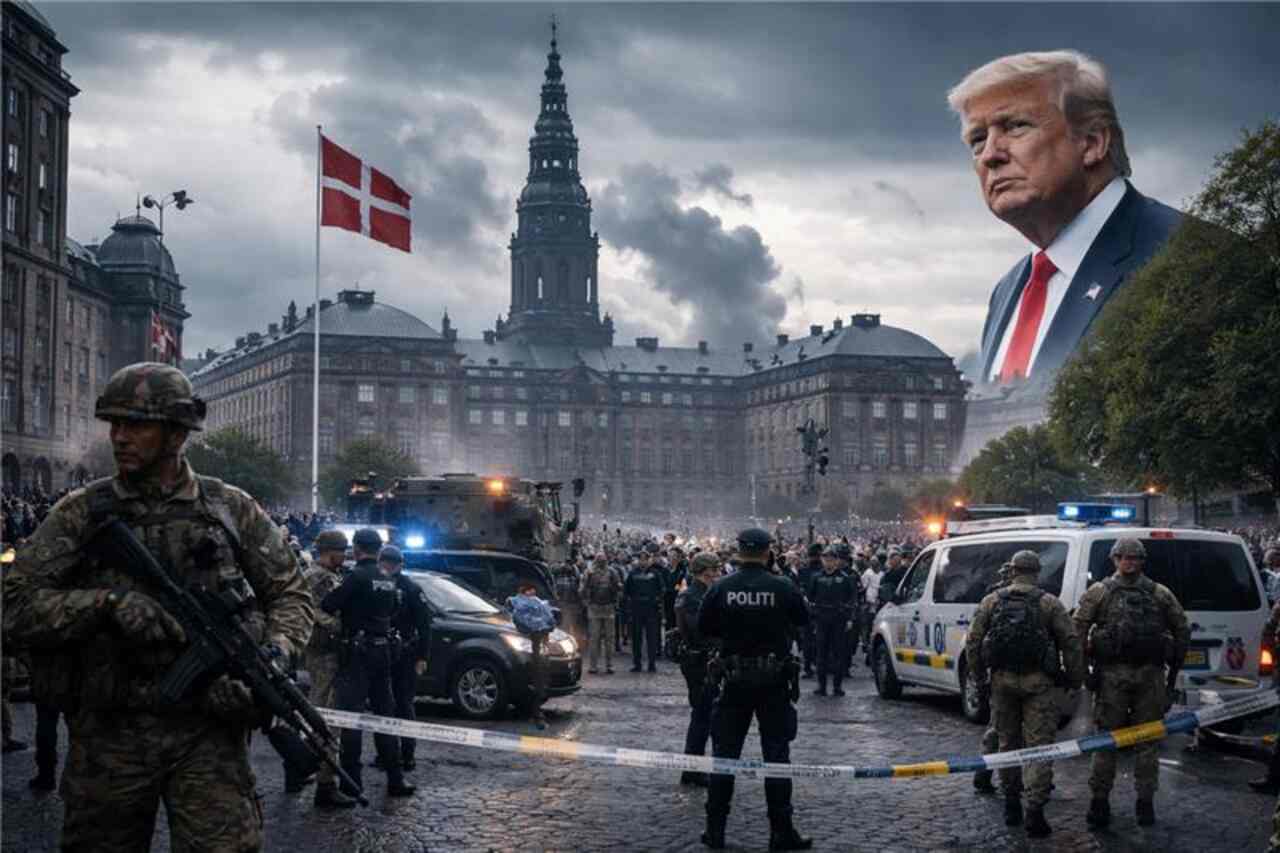
Why Is Denmark Entering Crisis Mode Over Greenland’s Status?
Denmark’s state response intensified following U.S. President Donald Trump’s renewed interest in acquiring Greenland after executing a military operation in Venezuela. Denmark considers these developments a national security threat and views the sequence of U.S. actions as a geopolitical maneuver targeting Arctic influence.
What Triggered the Escalation Between the U.S. and Denmark?
The trigger was a U.S. military intervention in Venezuela that led to the removal of Nicolás Maduro. Following this event, President Trump publicly reiterated his ambition to bring Greenland under U.S. control. This political linkage between Venezuela and Greenland suggested a broader strategic doctrine involving both South American and Arctic territories.
How Is the Danish Government Reacting to U.S. Rhetoric?
Prime Minister Mette Frederiksen declared that any military action or coercive claim over Greenland would dismantle NATO’s integrity and undermine the post-WWII transatlantic security structure. Denmark is now operating in full crisis mode, ramping up diplomatic resistance across NATO and the EU.
Why Is Greenland So Central to Denmark’s National Security Doctrine?
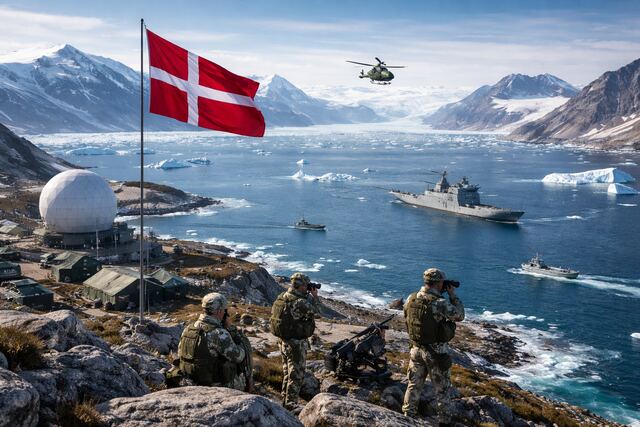
Greenland, though autonomous, is a sovereign territory under the Kingdom of Denmark and covered by NATO’s mutual defense obligations. The island’s location provides surveillance and missile defense advantages over the Arctic and North Atlantic. U.S. attempts to claim control disrupt the equilibrium Denmark maintains over Arctic affairs.
What Are the Diplomatic Channels Denmark Is Pursuing?
Denmark initiated high-level discussions within NATO and the EU Council to secure collective defense guarantees. Danish foreign policy is now oriented toward ensuring Arctic sovereignty becomes a non-negotiable principle across European and NATO security dialogues.
How Is Greenland Responding to U.S. Annexation Rhetoric?
Greenland’s Prime Minister and Parliament have categorically rejected any notion of sale, acquisition, or annexation. The political leadership emphasized democratic governance, indigenous rights, and international law as core principles guiding Greenland’s geopolitical stance.
What Legal Grounds Support Greenland’s Position?
Under the Danish Constitution and Greenland’s Self-Government Act, all decisions regarding its territory and governance rest with its people. Any unilateral claim by a foreign power would violate the UN Charter and international norms of sovereignty and self-determination.
What Role Do Indigenous Communities Play in Greenland’s Response?
Indigenous Inuit leaders have aligned with the government’s firm position, reinforcing that cultural sovereignty is inseparable from territorial integrity. The leadership highlighted historical exploitation and warned against any neo-colonial framing of Arctic diplomacy.
How Has Greenland Communicated With the International Community?
The Greenlandic government has launched a diplomatic campaign targeting Arctic Council members, Nordic allies, and the United Nations, asserting that the U.S. rhetoric constitutes a violation of peaceful international conduct.
Are There Movements Toward Greenlandic Independence?
While independence has been part of Greenlandic political discourse, the U.S. threat has caused a shift toward strengthening ties with Denmark for security purposes. Strategic autonomy is being explored through legal, environmental, and economic frameworks, not military realignment.
What Is NATO’s Position on the Greenland Dispute?
NATO members, including France, Germany, the UK, Italy, and Poland, have issued a joint declaration recognizing Greenland’s current status under Denmark’s sovereignty. The declaration states that only Greenland and Denmark have the authority to decide the island’s future.
How Are European States Interpreting the U.S. Threat?
European nations are interpreting Trump’s statements as a challenge to the core principles of the NATO alliance, particularly Article 5’s collective defense guarantee. European defense ministers emphasized that territorial claims among allies are unacceptable.
What Implications Could This Have for NATO Cohesion?
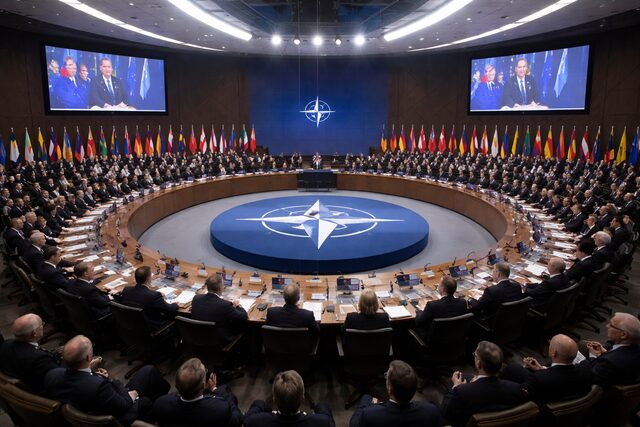
If the U.S. were to act unilaterally, NATO could face an unprecedented internal rift. Denmark’s position underscores that the alliance cannot function if member states pursue hostile objectives against each other’s territories.
How Are Defense and Intelligence Agencies Responding?
European and Nordic intelligence agencies have increased Arctic surveillance, cyber threat monitoring, and joint military exercises near Greenland’s airspace. The goal is to prevent any misinformation campaigns or hybrid threats targeting the island.
Has the Crisis Sparked Broader EU Solidarity?
The European Union has begun formal discussions to include Arctic sovereignty in its Common Foreign and Security Policy (CFSP), reinforcing Denmark’s stance and integrating Greenland into the EU’s strategic priorities despite its non-member status.
Why Is Greenland Strategically Important to the United States?
Greenland’s Arctic position offers military, economic, and geopolitical advantages. U.S. interest stems from both Arctic militarization trends and the resource-rich potential of Greenland’s landmass.
How Does the Arctic Location Influence U.S. National Security Strategy?
Greenland provides direct access to North Atlantic sea routes, satellite tracking positions, and ballistic missile early-warning systems. The Thule Air Base already gives the U.S. presence in Greenland, but acquisition would represent total strategic control.
What Natural Resources Drive U.S. Interest?
Greenland holds rare earth elements, uranium, and untapped oil reserves. These resources are critical to advanced technologies, clean energy infrastructure, and defense systems, particularly in light of China’s dominance over global rare earth supply chains.
What Role Does Great Power Competition Play?
U.S. assertions over Greenland are part of a broader geopolitical contest with Russia and China in the Arctic. China has invested in Arctic research and logistics hubs, while Russia has expanded its military infrastructure along the Northern Sea Route. U.S. policymakers view Greenland as the last frontier in Arctic dominance.
Has the U.S. Signaled Any Policy Shifts Toward the Arctic?
The U.S. administration announced a strategic review of Arctic policy post-Venezuela operation, prioritizing Arctic militarization, commercial partnerships, and surveillance networks. Greenland is at the core of this Arctic pivot.
