

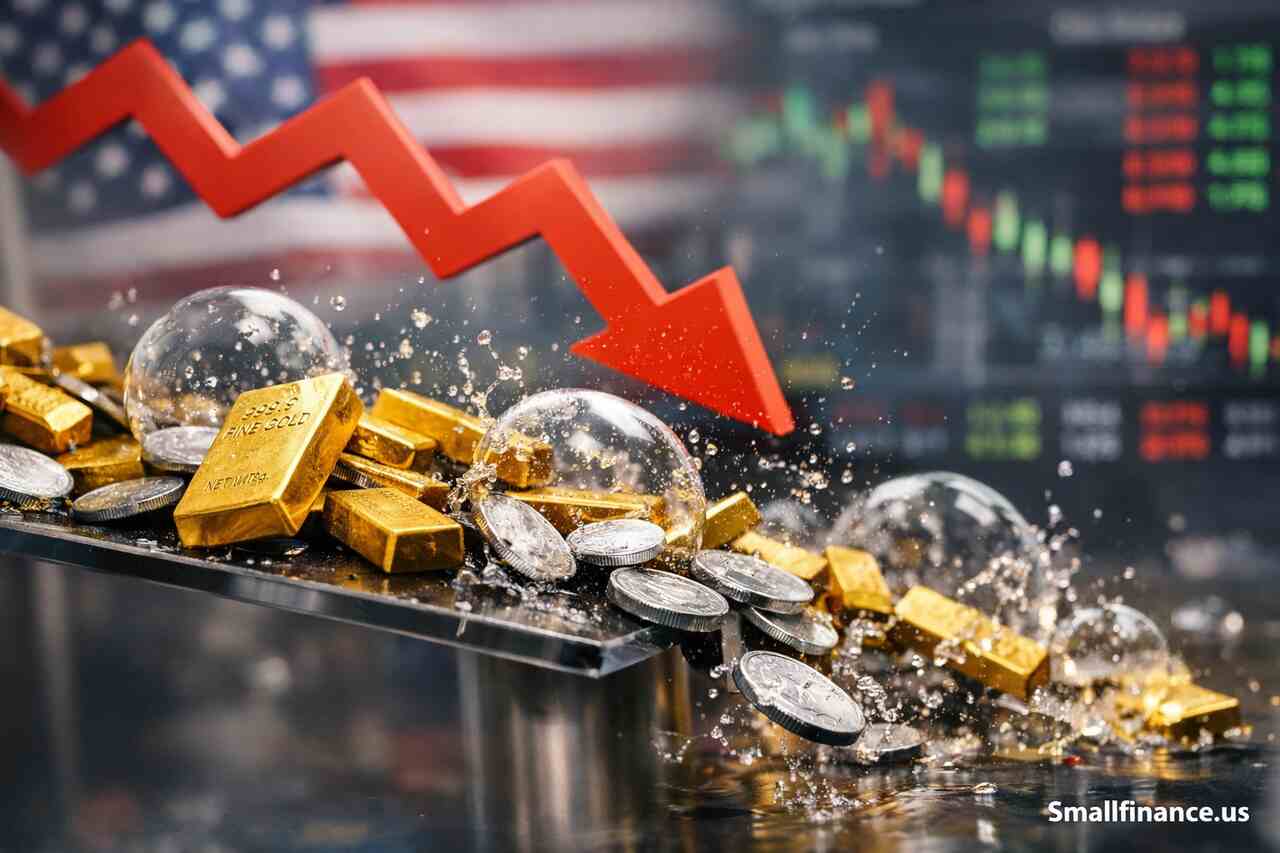
GOLD and SILVER fell at the start of trade in New York on Wednesday. One major US bank said that they were risking a “bubble,” and the drop undid the day’s strong gains after the US jobs report in January ended a string of bad data from the world’s largest economy.
A week ago, the Dollar hit a one-week low on the DXY index against other rich-economy currencies. It then jumped back up almost ¥0.1 against the Chinese Yuan after the Bureau of Labor Statistics reported that non-farm payrolls added almost twice as many jobs as analysts had predicted last month. Wage growth sped up as the unemployment rate unexpectedly fell to a five-month low.
But that still put the US dollar close to its 4-year low on the DXY index, and overnight it hit a new 33-month low against the CNY.
Gold and silver both went up again, this time to $5070 and $85 per Troy ounce, respectively. The Dollar thenF went down.
Both levels were new all-time highs for the “hard money” precious metals just one month ago. “The sharp rally in gold over the last three months has come with increasing instability,” says the Bubble Risk Indicator from the US’s largest bank, Bank of America.Silver, the Korean Kospi index, and rare earth stocks are some of the other assets that are acting like bubbles. Most of these price changes are caused by a weak dollar, but we think that part of the story is too big.Even though there is unpredictability and policy changes, the US economy is still doing better than most others. The value of the dollar could only go down so far from here, in part because of how monetary policy would change in other countries.
Within an hour of today’s better-than-expected US job numbers, the prices of gold and silver fell 1.2% and 2.5%, respectively.
Before June’s decision, the chances of betting on the Federal Reserve’s monetary policy were “no change.” However, the odds of a cut at that month’s meeting dropped from 75% to just 60%, according to the FedWatch tool from the CME derivatives exchange.
The jobs surprise today came after what the Financial Times calls a “string of bleak data” that began a week ago with Challenger, Gray & Christmas reporting the biggest drop in New Year job cuts since the 2009 recession.There was a big drop in US retail sales yesterday, which was worse than expected. “That brick wall in consumer spending has now been hit,” says Albert Edwards, an economist at the French bank SocGen.
Today is the last day for the US federal government to balance its budget for January. On Friday, prices will go up for consumers.
Friday will also bring economic growth and job numbers from the Eurozone, which is made up of 21 countries. Since June, the European Central Bank has kept interest rates at a three-year low.
Today, the price of gold in the Euro hit a one-week high near €4300 an ounce. It then fell back to €4270 after the US jobs report.
The price of an ounce of gold in the UK hit a two-week high of £3738 before falling back to £3700.Citic Securities, an investment bank based in Shenzhen, says that this round of Yuan gain is different from any others because it’s caused by more people using the Chinese currency as money around the world and “mounting global distrust of the US Dollar.”
