

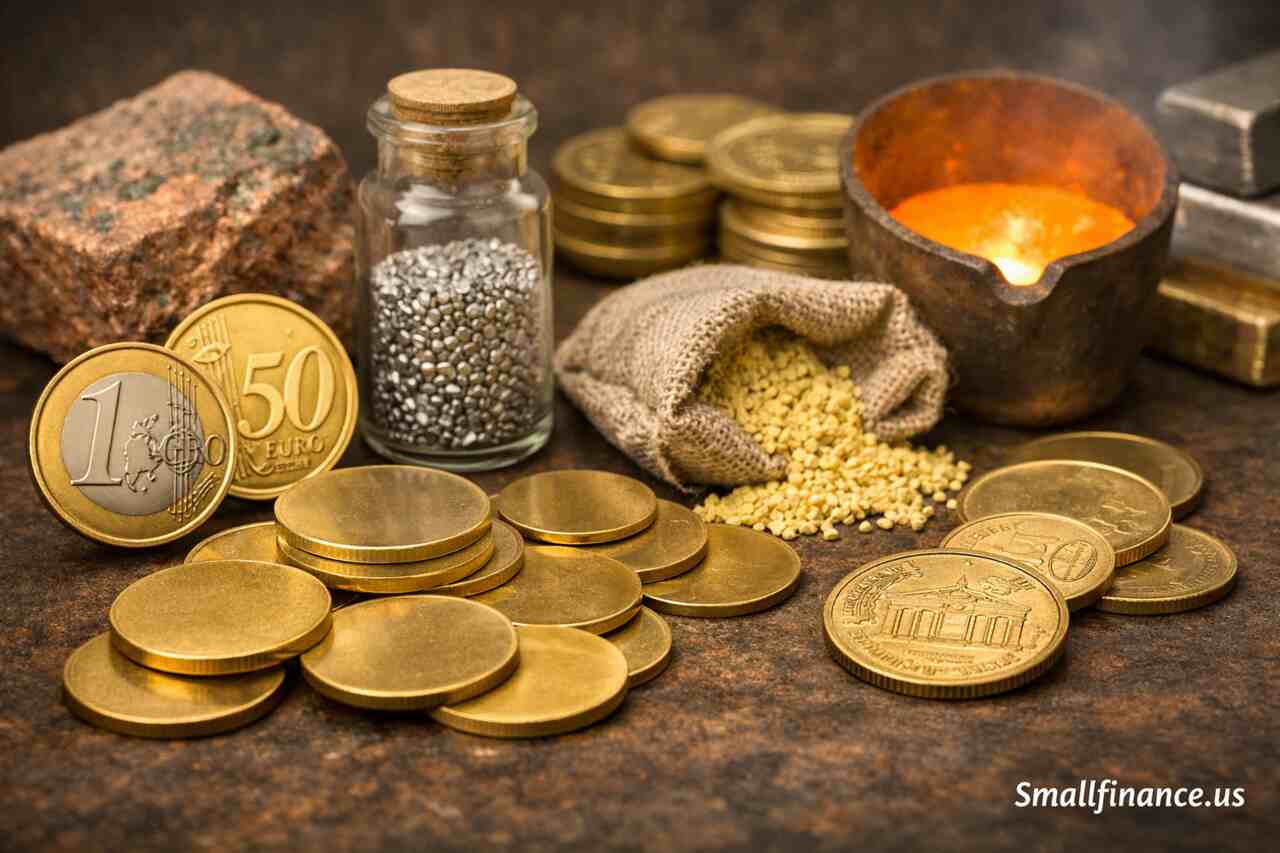
Nordic gold is one of the most recognizable metal alloys in modern coin production, yet many people know it only by appearance. Its warm golden color often leads to confusion with precious metals, but its real value lies in durability, corrosion resistance, production efficiency, and visual appeal. For coin collectors, manufacturers, students, and curious readers, understanding nordic gold helps separate appearance from composition and explains why major mints continue to rely on it. This guide covers the alloy in practical detail, from its makeup and physical behavior to coin applications, maintenance, identification, and common misunderstandings.
Learn the Core Composition of Nordic Gold
Nordic gold is a copper-based alloy created to deliver a gold-like appearance without relying on precious metal content. Its standard composition contains mostly copper, supported by aluminum, zinc, and tin. That formula gives the alloy its distinctive color, stable surface, and strength in circulation. The result is a material that looks refined, handles wear well, and remains cost-effective for large-scale minting.
Each ingredient performs a specific function in the alloy. Copper provides the base structure and much of the warm yellow tone. Aluminum improves strength and contributes to the brighter golden appearance. Zinc supports hardness and workability during manufacturing. Tin helps refine corrosion resistance and overall performance in demanding circulation environments. Together, these elements create a balanced alloy that offers reliable mechanical properties and a clean visual finish.
This composition matters because coinage demands more than beauty. A coin alloy must survive repeated handling, friction, environmental exposure, and long circulation cycles. Nordic gold meets those requirements while remaining practical for minting authorities that need millions of uniform pieces. Its success comes from controlled metallurgy rather than intrinsic metal value, which is exactly why it became such a useful material in public currency systems.
Recognize the Physical Properties That Make Nordic Gold Valuable
The practical value of nordic gold comes from its performance under daily use. The alloy resists corrosion, keeps its appearance reasonably well, and tolerates repeated contact in pockets, cash drawers, vending systems, and transport channels. It is also firm enough to preserve design details while still workable enough for efficient striking. Those traits make it especially suitable for coins that need long service life.
Hardness and durability are central to its appeal. A circulation coin must retain its shape, edge structure, and stamped design after constant movement through hands and machines. Nordic gold supports that need by offering good wear resistance without becoming so hard that striking becomes inefficient. The alloy also shows dependable dimensional stability, which helps mints produce coins with consistent thickness, diameter, and relief.
Its color adds another layer of functional value. A coin that stands apart visually is easier to identify, harder to confuse with other denominations, and more recognizable in everyday transactions. Nordic gold supports denomination differentiation by providing a distinct golden tone that remains separate from silver-colored alloys and plated steel options. In practical terms, appearance improves usability, not just aesthetics.
Identify the Metals Used in Nordic Gold and Their Roles
Understanding the individual metals in nordic gold makes the alloy easier to evaluate. Copper is the dominant element, and it shapes both the base strength and the rich, warm undertone. Because copper is highly workable, it supports the forming and striking processes used in coin manufacturing. It also gives the alloy much of its familiar metallic response during production.
Aluminum plays a major supporting role. It lightens the visual character of the copper base and helps create the golden appearance associated with the alloy. It also contributes to improved hardness and surface stability. That combination makes aluminum especially important in balancing looks with circulation performance.
Zinc adds manufacturing and structural benefits. It helps the alloy remain workable while improving resistance to deformation. Tin contributes further protection against environmental wear and assists in refining the alloy’s long-term behavior. These additions may be present in smaller amounts than copper, but their influence is significant. The final alloy works well because each metal supports a specific requirement in appearance, durability, and minting consistency.
Compare Nordic Gold With Precious Gold Before Assigning Value
Many people assume nordic gold contains actual gold because of its name and color. It does not. The alloy is non-precious, and its market value is based on industrial metal content and coin utility rather than bullion worth. This distinction is essential for collectors, buyers, and casual owners who may misread color as monetary rarity.
Gold, as a precious metal, has intrinsic value tied to global commodity markets, purity levels, and investment demand. Nordic gold has none of those characteristics. It is designed for function, not bullion storage. That means a coin made from nordic gold may be valuable as a collectible, historical issue, or rare mint error, but not because the alloy itself contains gold. The name describes appearance more than material status.
The difference becomes even more important in buying and selling. A coin’s worth depends on denomination, mintage, condition, rarity, and collector demand. The alloy contributes to durability and look, but it does not place the coin in the same category as gold sovereigns, bullion rounds, or jewelry-grade gold pieces. Clear knowledge prevents costly mistakes and improves confidence when evaluating coins.
| Feature | Nordic Gold | Precious Gold |
| Main purpose | Circulation coin alloy | Investment, jewelry, bullion, high-value coinage |
| Metal value | Low to moderate industrial value | High precious metal value |
| Gold content | None | Present in measured purity |
| Color | Gold-like yellow tone | Natural gold color |
| Typical use | Durable modern coins | Bullion coins, commemoratives, luxury products |
| Pricing basis | Coin type and collectibility | Weight, purity, and market price |
Trace the Development of Nordic Gold in Modern Minting
Nordic gold emerged as a practical response to the needs of modern coinage systems. Mints required an alloy that looked distinctive, resisted corrosion, struck cleanly, and remained economical at scale. The alloy answered those needs by combining copper with selected secondary metals to create a stable, circulation-ready material that could serve both visual and technical goals.
Its adoption grew as monetary systems evolved and public currencies required materials suited to automated handling. Coins increasingly had to work in machines, sorting systems, transport mechanisms, and counting equipment. Nordic gold offered consistent electromagnetic and physical characteristics, which made it a strong fit for modern mint technology. That compatibility helped expand its use in contemporary denominations.
Its rise also reflects a wider shift in coin production. Governments moved away from expensive materials in everyday circulation while still aiming to maintain public trust, visual distinction, and manufacturing efficiency. Nordic gold fits that model well. It gives coins a dignified appearance without creating the cost burden associated with precious metals. In that sense, the alloy represents a practical balance between economy and design.
Examine the Role of Nordic Gold in Euro Coins
One of the best-known uses of nordic gold is in certain euro coin denominations. Its color helps create visual contrast within the euro system, making coins easier to separate and identify. The alloy also supports the technical requirements of a currency used across many countries, where consistency matters in both public handling and machine recognition.
In circulation, euro coins made with nordic gold benefit from the alloy’s wear resistance and clean visual presence. Coins pass through countless hands and devices, so surface integrity matters. A material that holds relief detail, edge definition, and basic color stability supports both usability and public confidence. That is one reason nordic gold became so suitable for these denominations.
The euro system also demonstrates how alloy choice influences practical currency design. Different coin values need distinct appearance, weight, size, and machine-detectable characteristics. Nordic gold contributes to that layered system by offering a gold-toned option that complements other coin metals without relying on precious content. The alloy’s use in euro coinage helped make it widely recognized among collectors and everyday users alike.
Evaluate Nordic Gold for Coin Durability and Circulation Performance
Circulation performance is where nordic gold proves its worth most clearly. A good coin alloy must survive abrasion, stacking pressure, environmental changes, oils from human skin, and repeated friction against other coins. Nordic gold handles those demands well, which reduces replacement frequency and improves cost efficiency for issuing authorities.
Its durability supports the preservation of design elements. Portraits, national emblems, lettering, and denomination marks need to remain legible over time. An alloy that softens too quickly will lose clarity and become difficult to identify. Nordic gold provides enough firmness to preserve that relief while remaining workable during the minting stage. This balance supports both production quality and long service life.
The alloy also performs well in public settings where appearance matters. Coins that discolor too fast or show irregular wear can reduce trust in the currency. Nordic gold ages in a more controlled way than many alternative materials, and that helps maintain a clean, stable presentation in circulation. A coin does not need to stay flawless, but it does need to remain identifiable and respectable through years of use.
Distinguish Nordic Gold From Brass, Bronze, and Gold-Plated Metals
Nordic gold often gets confused with brass, bronze, and gold-plated materials because all can display yellow or warm metallic tones. Visual similarity, however, does not mean identical composition or purpose. Nordic gold is a specific alloy designed for coinage performance, while brass and bronze may serve broader industrial, decorative, or manufacturing uses.
Brass usually combines copper and zinc, often showing a bright yellow appearance. Bronze traditionally combines copper and tin, though modern bronze formulas vary. Gold-plated items contain a thin outer layer of actual gold over a base metal. Nordic gold differs from each of these categories because its formula is tuned specifically for color stability, coin striking, wear resistance, and reliable behavior in circulation systems.
This distinction matters for collectors and anyone handling mixed metal objects. A coin with a gold-like tone should not be assumed to be brass or plated simply by sight. Weight, strike quality, known mint specifications, and composition data offer better guidance. Understanding these differences helps avoid misidentification and supports more accurate appraisal of both circulating and collectible coins.
| Material | Typical Base Metals | Contains Real Gold | Common Use | Visual Similarity to Nordic Gold |
| Nordic gold | Copper, aluminum, zinc, tin | No | Modern coinage | High |
| Brass | Copper and zinc | No | Hardware, instruments, decorative items | Moderate to high |
| Bronze | Copper and tin, sometimes others | No | Sculpture, bearings, medals, components | Moderate |
| Gold-plated metal | Base metal plus gold coating | Yes, surface only | Jewelry, decorative goods, tokens | High |
| Solid gold alloy | Gold plus alloying metals | Yes | Bullion, jewelry, high-value coins | High |
Identify Common Uses of Nordic Gold Beyond Basic Recognition
Although nordic gold is most strongly associated with coinage, its significance extends beyond simple visual recognition. In public currency, it supports denomination distinction, machine compatibility, and long-term service. That makes it especially useful in large economies where millions of coins must remain uniform across years of circulation.
Collectors also encounter nordic gold in commemorative or special-issue contexts where color contrast improves design impact. Even when the alloy itself is not rare, the coins made from it can carry artistic, national, or historical value. In these cases, the metal becomes part of a broader design strategy that balances visual appeal with cost efficiency.
Educational and technical interest forms another area of use. Students of metallurgy, industrial design, and numismatics often study nordic gold because it demonstrates how an alloy can be tailored for a very specific application. It provides a strong example of how composition influences function, appearance, longevity, and public utility. That makes it relevant in both collecting communities and technical discussions of material science.
Check How Nordic Gold Supports Machine Recognition
Modern coins must work with more than people. They must also function inside vending machines, ticketing systems, transit devices, parking meters, sorting units, and cash handling equipment. Nordic gold supports this requirement because its physical and electromagnetic characteristics can be measured and recognized reliably by machines calibrated to accept legitimate coins.
Machine compatibility depends on consistency. Coins need predictable diameter, thickness, mass, conductivity, and alloy behavior. Nordic gold helps provide that stability across large production runs. When mints produce coins with uniform alloy composition, device manufacturers can build systems that distinguish authentic pieces from foreign objects or counterfeit substitutes with greater confidence.
This technical advantage often receives less attention than color, but it is one of the alloy’s most practical benefits. Public currency now interacts with countless automated systems every day. A coin metal that fails this test creates friction for users, businesses, and governments. Nordic gold contributes to smoother circulation by supporting both physical durability and dependable machine response.
Inspect Nordic Gold Coins for Authenticity and Condition
Inspecting a nordic gold coin starts with visual examination. The color should appear warm and even, though normal circulation wear may create mild variation. Design elements should match official specifications, including lettering, relief depth, edge form, and denomination details. A coin that looks unusually bright, oddly dull, or poorly struck may require closer review.
Weight and dimensions provide another level of verification. Authentic coins follow precise standards set by issuing authorities. A piece that feels too light, too thick, or unusually soft may be altered, counterfeit, or damaged. Surface texture also matters. Genuine circulation strikes tend to show consistent production quality, while suspicious pieces may reveal bubbles, uneven casting marks, or blurred design boundaries.
Condition grading adds further context. A nordic gold coin may be common in composition yet valuable in high grade or rare issue status. Scratches, discoloration, edge knocks, and wear on raised details all influence collectibility. Inspection should therefore separate two questions: whether the coin is genuine, and how well it has survived. Those are related, but they are not the same.
Store and Clean Nordic Gold Coins With Care
Proper storage helps nordic gold coins retain both appearance and collector value. Coins should be kept in dry, stable conditions away from excessive humidity, direct contamination, and abrasive contact with other objects. Individual holders, albums, capsules, or archival storage materials reduce friction and prevent unnecessary surface damage.
Cleaning should be approached with caution. Aggressive rubbing, chemical dips, or abrasive tools can damage the coin’s surface, reduce detail, and lower collector interest. In most cases, a coin should be left as found unless there is a clear conservation reason and the process is appropriate for its value and condition. Original surfaces are usually preferred over artificially brightened ones.
Handling technique also matters. Oils and dirt from fingers can affect coin surfaces over time, especially on collectible examples. Holding coins by the edges reduces the chance of smudging or micro-abrasion on the main design fields. Good storage and gentle handling do more for long-term preservation than frequent cleaning ever will.
Assess Nordic Gold Coins From a Collector’s Perspective
For collectors, nordic gold is rarely the source of value by itself. Instead, the attraction usually comes from denomination history, national design, mintage figures, mint errors, condition rarity, and set completion. The alloy gives the coin a recognizable look and good durability, but the real collecting story depends on issue-specific factors.
Certain coins made from nordic gold become desirable because they mark historical transitions, design updates, special releases, or low-production years. Others matter because of unusual errors such as off-center strikes, wrong planchets, die clashes, or edge anomalies. In these cases, composition is part of identification, but scarcity and demand drive the premium.
Collectors also appreciate the alloy because it tends to preserve detail reasonably well in higher-grade examples. That helps when building attractive sets or comparing circulation wear patterns across years and mints. Nordic gold coins may be accessible for beginners, yet they still offer enough variation and technical interest to keep experienced numismatists engaged.
Avoid Common Misunderstandings About Nordic Gold
A frequent misunderstanding is that nordic gold has investment value similar to precious metal coinage. It does not. A coin made from this alloy is not a gold bullion coin, and its value does not track the gold market. Treating it as a precious metal product leads to confusion and sometimes overpayment.
Another common mistake is assuming that all gold-colored coins are made from nordic gold. Many yellow-toned coins use different alloys, plating methods, or layered structures. Accurate identification depends on official specifications, not color alone. Appearance may suggest a category, but it cannot confirm composition by itself.
People also sometimes believe that tarnish, dullness, or wear proves a coin is fake. In reality, circulation history affects all coin surfaces. Genuine coins can darken, scratch, or lose brightness over time. The better approach is to examine the full picture, including design fidelity, size, mass, edge detail, and known mint data. Good evaluation replaces quick assumptions.
Apply Nordic Gold Knowledge When Buying or Selling Coins
When buying or selling coins associated with nordic gold, start with the coin issue rather than the alloy name. Identify the country, denomination, year, mint mark if present, and condition. Those details shape value far more than the fact that the coin uses a gold-colored alloy. A common circulated coin remains common even if it looks attractive.
Next, compare the coin against official specifications and market demand. Weight, dimensions, and visual design should align with known standards. Then review whether the piece is ordinary circulation material, an uncirculated example, a proof issue, a rare variety, or an error coin. That distinction often determines whether the coin is worth face value, a modest premium, or a substantial premium.
Clear communication also helps during transactions. Sellers should avoid implying gold content where none exists, and buyers should ask precise questions about condition, authenticity, and issue rarity. Nordic gold can make a coin visually impressive, but informed pricing depends on factual description. Strong knowledge protects both sides of the transaction.
Use Nordic Gold as a Case Study in Material Selection
Nordic gold offers a useful lesson in how materials are chosen for public applications. The best industrial material is not always the rarest or most expensive. In many cases, the best option is the one that balances cost, strength, manufacturability, appearance, safety, and long-term performance. Nordic gold reflects that principle clearly.
Its composition shows how a base metal can be improved through controlled additions. Copper gives structure and color, while aluminum, zinc, and tin refine the alloy for a demanding purpose. This combination demonstrates that successful design often depends on precision and balance rather than prestige. The alloy works because it was built around practical needs.
That broader lesson matters beyond coins. Engineers, manufacturers, and designers regularly face similar choices when selecting materials for tools, components, consumer goods, and infrastructure. Nordic gold stands as a strong example of purpose-driven metallurgy, where the final product succeeds because every element supports a defined real-world function.
Conclusion
Nordic gold is a practical alloy with a distinctive golden appearance, strong circulation performance, and lasting importance in modern coinage. Its value does not come from precious metal content. Instead, it comes from a carefully balanced composition that supports durability, corrosion resistance, machine compatibility, and clear visual identity. For collectors, it helps identify important modern coins. For students and curious readers, it offers a clear example of how alloy design shapes everyday objects. Once you understand nordic gold, it becomes easier to evaluate coins accurately, avoid common myths, and appreciate the material choices behind modern currency.
FAQ’s
Does nordic gold contain real gold?
No. Nordic gold does not contain gold. It is a copper-based alloy designed to resemble gold in color.
Which metals are in nordic gold?
Nordic gold is typically made from copper, aluminum, zinc, and tin.
Is a nordic gold coin valuable because of the metal?
Usually no. Most value comes from the coin’s denomination, rarity, condition, issue type, or collector demand rather than alloy content.
Which coins commonly use nordic gold?
The alloy is widely known for use in certain euro coin denominations and other modern circulation coins.
Can nordic gold coins tarnish or change color?
Yes. Like many coin alloys, nordic gold can show wear, dulling, or surface change over time, especially in circulation.
Should nordic gold coins be cleaned?
Routine cleaning is usually not recommended for collectible coins. Improper cleaning can damage the surface and reduce collector value.
