

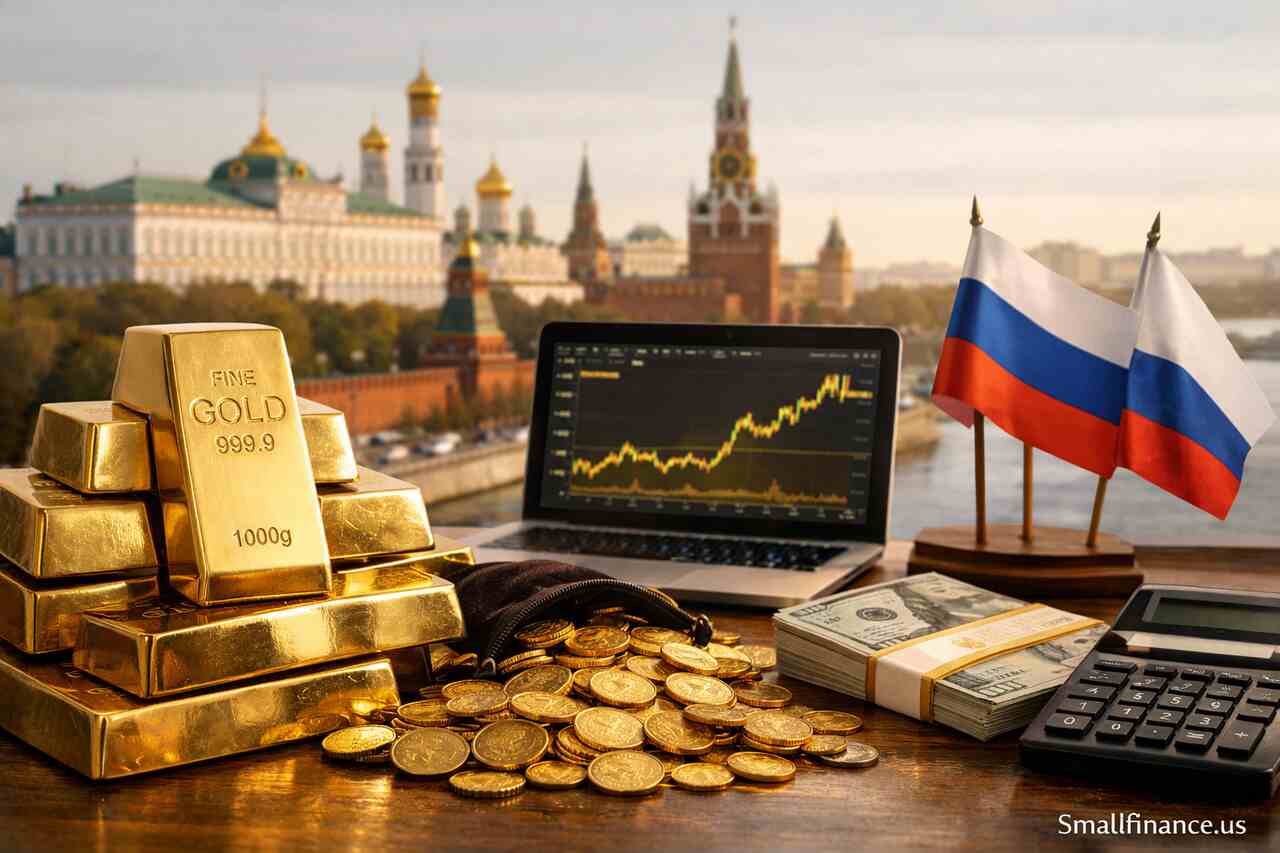
According to the most recent data from the Central Bank of Russia (CBR), a substantial quantity of gold was sold from its reserves in January, as prices reached all-time record highs of over $5,500 per ounce.
The CBR announced on Friday that the country had sold 300,000 ounces, resulting in a decrease in its total gold holdings to 74.5 million ounces. This marked the initial decline in Russia’s gold reserves since October.
In January, gold prices averaged approximately $4,700 per ounce, with a zenith of $5,600 per ounce. Consequently, the bullion sales are expected to have generated between $1.41 billion and $1.68 billion.
The value of Russia’s gold reserves increased by 23% to $402.7 billion in January, despite the sale, as prices reached record highs.
The value of Russia’s precious metals exports to China nearly doubled during the first half of 2025, according to Bloomberg reported in July.
Bloomberg reported at the time that Chinese imports of Russian precious metal ores and concentrates, including gold and silver, increased by 80% to $1 billion from the same period a year prior, citing data from China’s customs office and Trade Data Monitor. “Central banks and exchange-traded funds have purchased bullion, which has experienced a 28% increase in value this year, in addition to the impact of increased geopolitical risks and trade tensions.”
With an annual production exceeding 300 tonnes, Russia is the world’s second-largest gold producer, trailing only China. Since the full-scale invasion of Ukraine in 2022, Russia’s central bank has reduced its purchases of sovereign gold, which were previously among the largest in the world. In recent years, the People’s Bank of China has remained one of the most prominent central bank purchasers.
In volume terms, Russia’s gold exports to China have increased; however, the majority of this increase can be attributed to the gold price rally that has occurred over the past year, with spot prices increasing by nearly 43%.
The country’s gold miners are also contributing to the increase in domestic retail demand, which reached a record high last year as Russians sought precious metals to safeguard the value of their savings. In 2024, Russian consumers acquired 75.6 tonnes of gold, which accounts for approximately 25% of the nation’s annual production.
The most recent increase in the price of other precious metals has also resulted in a rise in revenues for Russia’s leading miners. The report noted that “MMC Norilsk Nickel PJSC, one of the world’s leading producers of palladium and platinum, has increased its exports to China this year.” “In 2025, the prices of the two metals increased by 38% and 59%, respectively.”
