

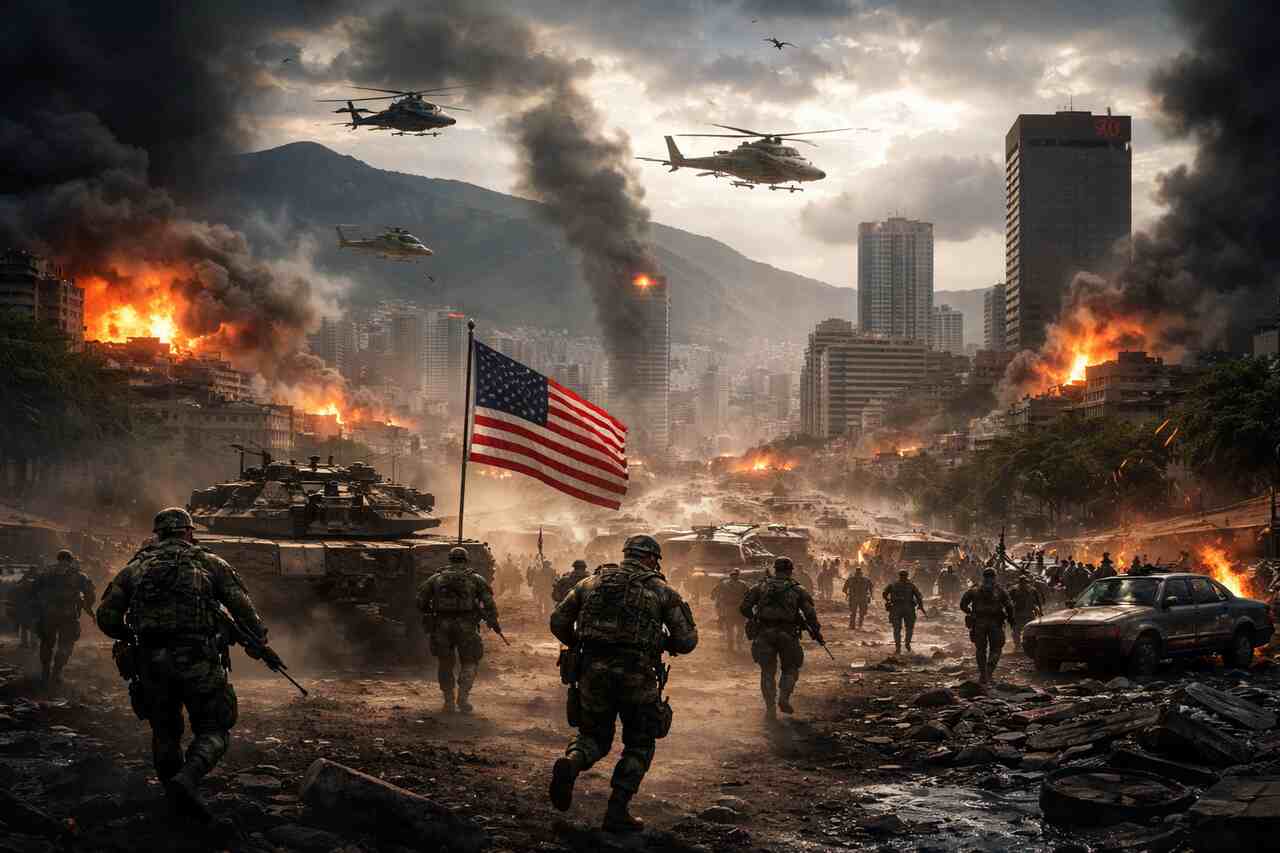
The U.S. military strike on Venezuela, which resulted in the capture of President Nicolás Maduro and his wife, has set off seismic political, economic, and legal tremors worldwide. What began as a bold foreign policy gambit has become a focal point of international debate over sovereignty, energy strategy, and the future of global order.
How Did the U.S. Action Unfold and What Was the Immediate Impact?
The operation, dubbed “Operation Absolute Resolve”, involved U.S. armed forces conducting airstrikes in northern Venezuela and ultimately detaining Maduro and his wife. The Biden administration’s rationale framed this as part of a broader effort to counter alleged narcoterrorism, but critics see it primarily as a coercive political intervention.
In the immediate aftermath:
- U.S. energy stocks rallied sharply, as markets positioned for potential U.S. access to Venezuela’s vast oil reserves and reconstruction of its energy infrastructure.
- Trump signaled that the U.S. would temporarily administer Venezuela and facilitate the rebuilding of its oil industry under American oversight.
What Are the Implications for Global Energy and Economic Power?
1. Reconfiguration of Global Oil Influence
Venezuela holds some of the largest proven oil reserves in the world, and U.S. involvement in restarting production could shift the balance in global energy markets. While crude prices have not spiked immediately due to a current supply surplus, long‑term alignment with U.S. energy interests could alter market dynamics and strategic dependencies—especially for Europe and Asia.
- Increased production could weaken influence of other exporters like Russia and OPEC.
- U.S. control over Venezuelan oil may reshape long‑term energy partnerships, particularly with China, which had developed deep ties with Caracas.
- Infrastructure investment demands and political instability may delay production gains.
How Has the International Community Responded?
2. Backlash From United Nations and Global South
Several nations and international bodies condemned the operation as a violation of Venezuelan sovereignty and a breach of the UN Charter.
- At the UN Security Council, countries including Brazil, China, Russia, and South Africa called the U.S. action a “crime of aggression” that undermines international law.
- Human rights authorities and legal experts argue the intervention erodes norms against unilateral military action and weakens global mechanisms for conflict prevention.
- The move has sparked protests across Latin America.
- Some governments fear a precedent for powerful states to override sovereignty under broad pretexts.
- Legal legitimacy and humanitarian consequences remain central issues of debate.
What Does This Mean for U.S. Foreign Policy and Global Alliances?
3. Shift Toward Assertive U.S. Posture
Analysts describe Trump’s strategy as a return to sphere‑of‑influence politics, with the U.S. prepared to intervene unilaterally if it perceives threats to national interests.
- The operation reflects a blend of national security and resource‑focused goals.
- It signals possible future pressures on nations like Cuba and other geopolitical hotspots.
- U.S. allies are recalibrating diplomatic relations to balance legal concerns with strategic ties.
What Are the Broader Geopolitical Consequences?
4. Great Power Rivalry and Global Order
The Venezuela episode highlights shifting dynamics between major powers, particularly the U.S., China, and Russia.
- China and Russia condemned the U.S. action while reassessing their support networks in Latin America.
- The event may accelerate realignments or competition in regions where both the U.S. and China seek influence.
- Smaller countries in Latin America and beyond are evaluating their security and diplomatic postures in light of this assertive U.S. policy.
What Comes Next?
5. Uncertain Path Forward
Political instability within Venezuela, legal battles over Maduro’s detention and trial, and ongoing international diplomatic reactions all suggest that the implications of Trump’s Venezuela offensive are only beginning to unfold.
- Venezuelan internal security measures have tightened in response to the attack.
- U.S. strategic and legal positioning will shape future interventions’ legitimacy.
- Global reactions may influence alliances, international law, and future foreign intervention norms.
