

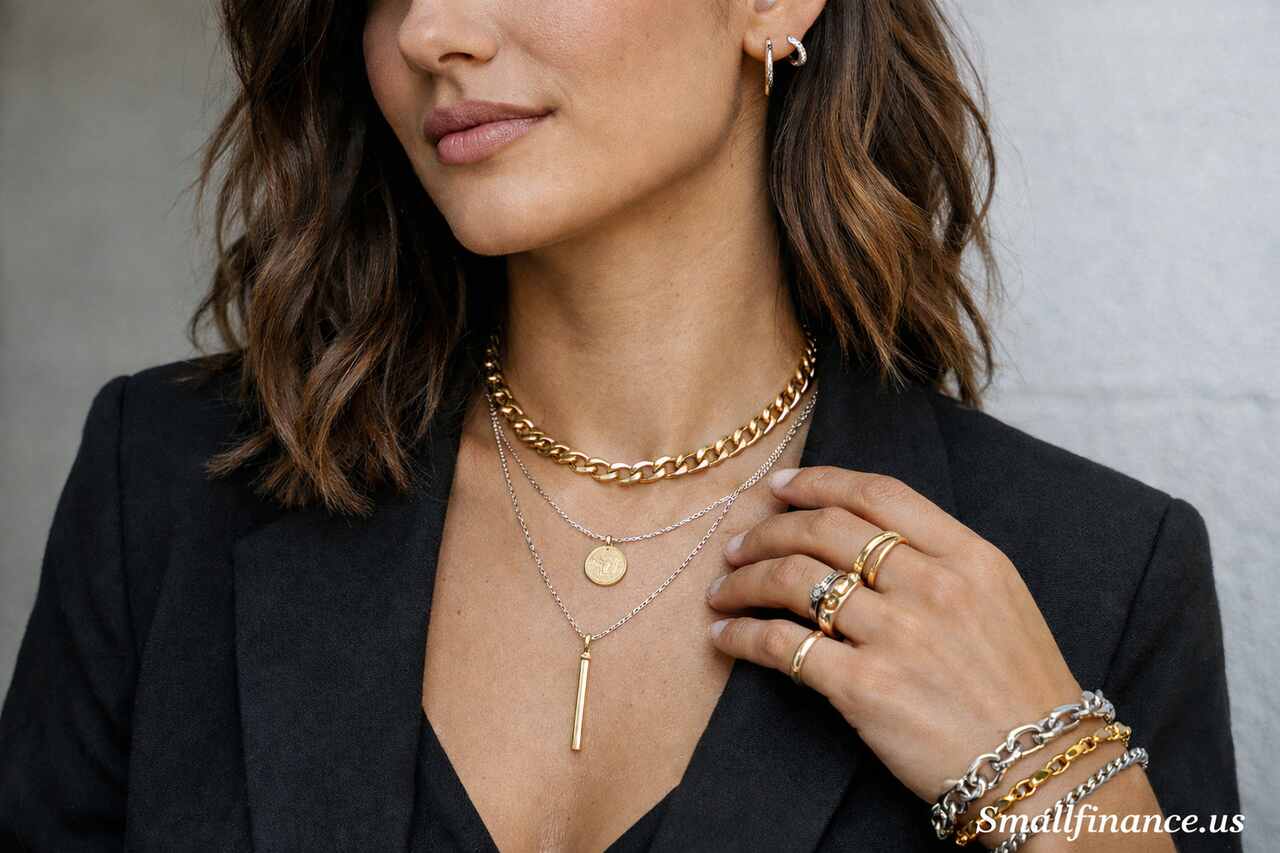
Yes, you can wear silver and gold together because modern fashion principles support mixed metal styling, and coordinated silver jewelry and gold jewelry create visual balance, depth, and personal expression when combined with intention.
Silver jewelry represents cool-toned metal styling, while gold jewelry represents warm-toned metal styling. Mixed metal fashion integrates both metals within one cohesive aesthetic. Fashion styling frameworks now prioritize harmony, proportion, and repetition over rigid color rules. Coordinated layering, intentional contrast, and strategic distribution transform silver and gold combinations into polished, elegant looks.
Jewelry styling plays a practical role for the reader because jewelry influences personal branding, wardrobe versatility, and social presentation. Mixed metals expand outfit combinations, reduce styling limitations, and modernize existing accessories. Strategic metal mixing increases jewelry utility while enhancing aesthetic sophistication.
Why Can Silver and Gold Be Worn Together in Modern Fashion?
Silver and gold can be worn together because contemporary fashion values intentional coordination over strict uniformity, and metal contrast creates dimension, movement, and stylistic balance when proportion and repetition align visually.
Modern style psychology recognizes contrast as a design strength. Contrast increases visual interest. Visual interest enhances memorability. Memorability strengthens personal style identity. Mixed metals function as a controlled contrast system.
Historical Fashion Norms
Traditional jewelry etiquette discouraged metal mixing because coordinated sets symbolized wealth and refinement. Coordinated sets promoted uniformity. Uniformity represented order and status.
Modern fashion dismantled rigid coordination rules. Contemporary design philosophy embraces asymmetry, layering, and curated imperfection. Mixed metals reflect this shift.
Color Theory and Metal Undertones
Silver reflects cool undertones. Gold reflects warm undertones. Cool and warm contrasts create balance when distributed evenly.
Balanced undertones prevent visual imbalance. Balanced distribution prevents clutter. Strategic spacing maintains harmony.
Personal Style Evolution
Minimalist fashion uses silver and gold combinations to soften monochromatic outfits. Maximalist fashion uses mixed metals to enhance layered textures. Capsule wardrobes benefit from versatile metal coordination.
Jewelry now supports self-expression rather than conformity. Personal expression increases stylistic flexibility.
Cultural and Runway Influence
Runway styling frequently features stacked gold chains layered with silver pendants. Editorial fashion campaigns showcase mixed metal watches, bracelets, and earrings. Celebrity styling normalizes contrast-driven accessories.
Fashion media accelerates normalization. Normalization increases adoption.
How Should You Mix Silver and Gold Jewelry for a Balanced Look?
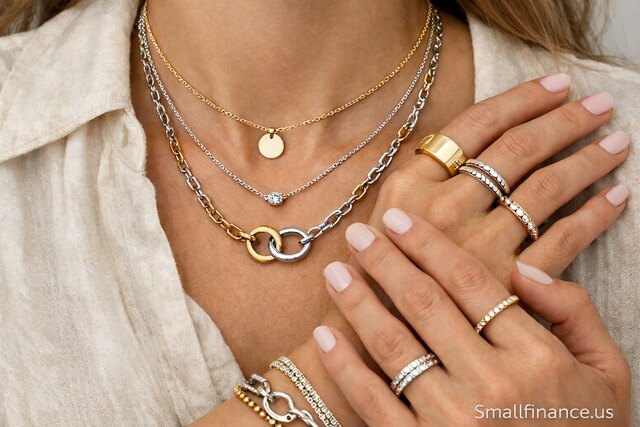
Balanced mixing requires proportion control, repetition, spacing, and anchor pieces that visually unify both metals.
1. Start with a Unifying Piece
A two-tone watch or necklace creates a visual bridge. Bridge pieces distribute both metals within one accessory. Visual bridging reduces contrast tension.
Examples include:
- Two-tone watches
- Mixed metal bangles
- Dual-metal pendants
- Gold chains with silver charms
Bridge pieces establish cohesion before additional layering begins.
2. Layer with Intention
Layered necklaces benefit from length variation. Length variation creates vertical flow. Vertical flow reduces clutter.
Stacked rings should alternate metals rather than cluster one metal separately. Alternating patterns create rhythm. Rhythm strengthens coordination.
Bracelet stacking benefits from spacing. Spacing prevents heaviness.
3. Maintain Metal Proportion
Dominant metal establishes structure. Secondary metal provides accent contrast. Balanced proportion prevents
| Styling Strategy | Silver Role | Gold Role | Visual Result |
| Dominant Gold | Accent rings | Main chains | Warm elegance with cool highlights |
| Dominant Silver | Base bracelets | Accent pendants | Modern minimal contrast |
| Equal Mix | Alternating stack | Alternating stack | Symmetrical harmony |
Proportion management improves clarity. Clarity improves aesthetic impact.
Silver and gold combinations depend on structure rather than randomness. Structured layering increases intentional styling. Intentional styling communicates confidence and awareness. Fashion awareness improves overall presentation.
What Jewelry Types Work Best for Mixing Silver and Gold?
Certain jewelry categories blend more naturally due to scale, placement, and visibility.
Necklaces
Necklaces provide vertical layering opportunities. Layered chains distribute metals evenly across the chest area.
Sub-entities:
- Choker necklaces
- Mid-length pendants
- Long chain necklaces
- Statement collars
Chokers anchor the neckline. Mid-length pendants introduce contrast. Long chains elongate proportions. Statement collars distribute visual weight evenly.
Rings
Rings allow alternating patterns. Finger spacing creates natural segmentation.
Sub-entities:
- Stackable bands
- Statement rings
- Midi rings
- Wedding sets
Stackable bands enable alternating metal placement. Statement rings centralize focus. Midi rings add layering detail. Wedding sets increasingly incorporate two-tone metals.
Bracelets
Bracelets stack horizontally. Horizontal stacking benefits from alternating tones.
Sub-entities:
- Bangles
- Cuffs
- Chain bracelets
- Charm bracelets
Bangles create rhythmic contrast. Cuffs anchor wrist styling. Chain bracelets soften transitions. Charm bracelets incorporate multi-metal charms for unity.
Earrings
Earrings frame the face. Facial framing requires subtle balance.
Sub-entities:
- Stud earrings
- Hoop earrings
- Drop earrings
- Ear climbers
Stud earrings work well in mixed stacks. Hoops blend through size variation. Drop earrings distribute vertical contrast. Ear climbers emphasize asymmetrical coordination.
What Are the Benefits and Drawbacks of Wearing Silver and Gold Together?
Mixed metal styling offers flexibility but requires awareness of balance and outfit coordination.
Benefits
- Increased wardrobe versatility
- Expanded accessory combinations
- Modern aesthetic appeal
- Enhanced layering depth
- Reduced need for duplicate jewelry purchases
Versatility improves cost efficiency. Efficiency increases practicality.
Drawbacks
- Risk of over-layering
- Potential visual clutter
- Skin undertone mismatch if poorly balanced
- Formal event incompatibility in traditional settings
Strategic styling reduces drawbacks.
| Aspect | Advantage | Limitation |
| Versatility | Matches multiple outfits | Requires coordination awareness |
| Trend Appeal | Reflects modern style | May clash in conservative dress codes |
| Cost Efficiency | Reuses existing jewelry | Demands balance discipline |
How Do Skin Undertones Affect Silver and Gold Pairing?
Skin undertones influence metal reflection. Reflection affects perceived harmony.
Cool undertones complement silver. Warm undertones complement gold. Neutral undertones support equal mixing.
Undertone testing methods:
- Vein color observation
- White fabric comparison
- Sun reaction assessment
- Jewelry reflection comparison
Neutral undertones offer highest flexibility. Balanced layering supports undertone harmony.
When Should You Avoid Mixing Silver and Gold?
Certain environments favor uniform metals.
Formal Ceremonies
Traditional weddings emphasize cohesive sets. Black-tie events prioritize minimal contrast.
Corporate Dress Codes
Conservative industries prefer subtle uniform styling.
Cultural Events
Some cultural traditions associate metal uniformity with symbolism.
Context awareness supports appropriate styling.
What Is the Future Scope of Mixed Metal Fashion?
Mixed metal jewelry aligns with sustainability and capsule wardrobe trends. Capsule wardrobes emphasize versatility. Versatility reduces consumption.
Jewelry brands increasingly produce two-tone collections. Two-tone production responds to consumer demand for flexibility.
Future trends include:
- Convertible jewelry pieces
- Magnetic metal layering systems
- Customizable modular chains
- Reversible pendants
Innovation increases personalization. Personalization enhances user engagement.
Conclusion
Silver and gold can be worn together because modern fashion prioritizes intentional balance over rigid coordination rules. Mixed metal styling enhances versatility, expands accessory combinations, and supports personal expression. Balanced proportion, repetition, and layering structure transform contrast into harmony. Strategic coordination minimizes drawbacks while maximizing aesthetic impact. Mixed metal fashion reflects contemporary design values rooted in flexibility, sustainability, and individuality.
Jewelry functions as both adornment and identity expression. Mixed metals strengthen that expression through contrast and cohesion working together.
FAQ’s
Is mixing silver and gold still fashionable?
Mixed metals remain fashionable because contemporary design embraces contrast layering and versatile styling frameworks.
How can beginners start mixing metals?
Beginners should start with a two-tone piece, maintain one dominant metal, and layer gradually with alternating accessories.
Can mixed metals work with watches?
Two-tone watches act as anchor pieces that unify silver and gold bracelets effectively.
Does mixing metals look unprofessional?
Mixed metals appear professional when layering remains minimal and proportion remains balanced.
Can wedding jewelry include both metals?
Modern wedding sets increasingly incorporate two-tone bands, especially for neutral undertones and contemporary design preferences.
